

Incident Response &
Digital Forensics Services
Respond to cyber incidents with greater speed and clarity through structured containment, investigation, digital forensics, recovery and post-incident analysis. Cylentrix incident response services support enterprise teams from the first validated alert, through cybersecurity incident investigation, to a controlled path back to normal operations.
- Detect
- Contain
- Investigate
- Recover
- EndpointHost artifacts
- NetworkTraffic records
- CloudControl-plane logs
- IdentityAccess activity
- ApplicationsService events
- DataExposure review
Respond with clarity when
a security incident happens
Incident response is the structured work of establishing what happened, limiting the damage, investigating the evidence that exists and returning the business to a controlled state.
A cybersecurity incident rarely stays in one place. Suspicious activity can surface on endpoints, in identities and privileged accounts, inside applications, across the network, in cloud environments and in the business data those systems hold.
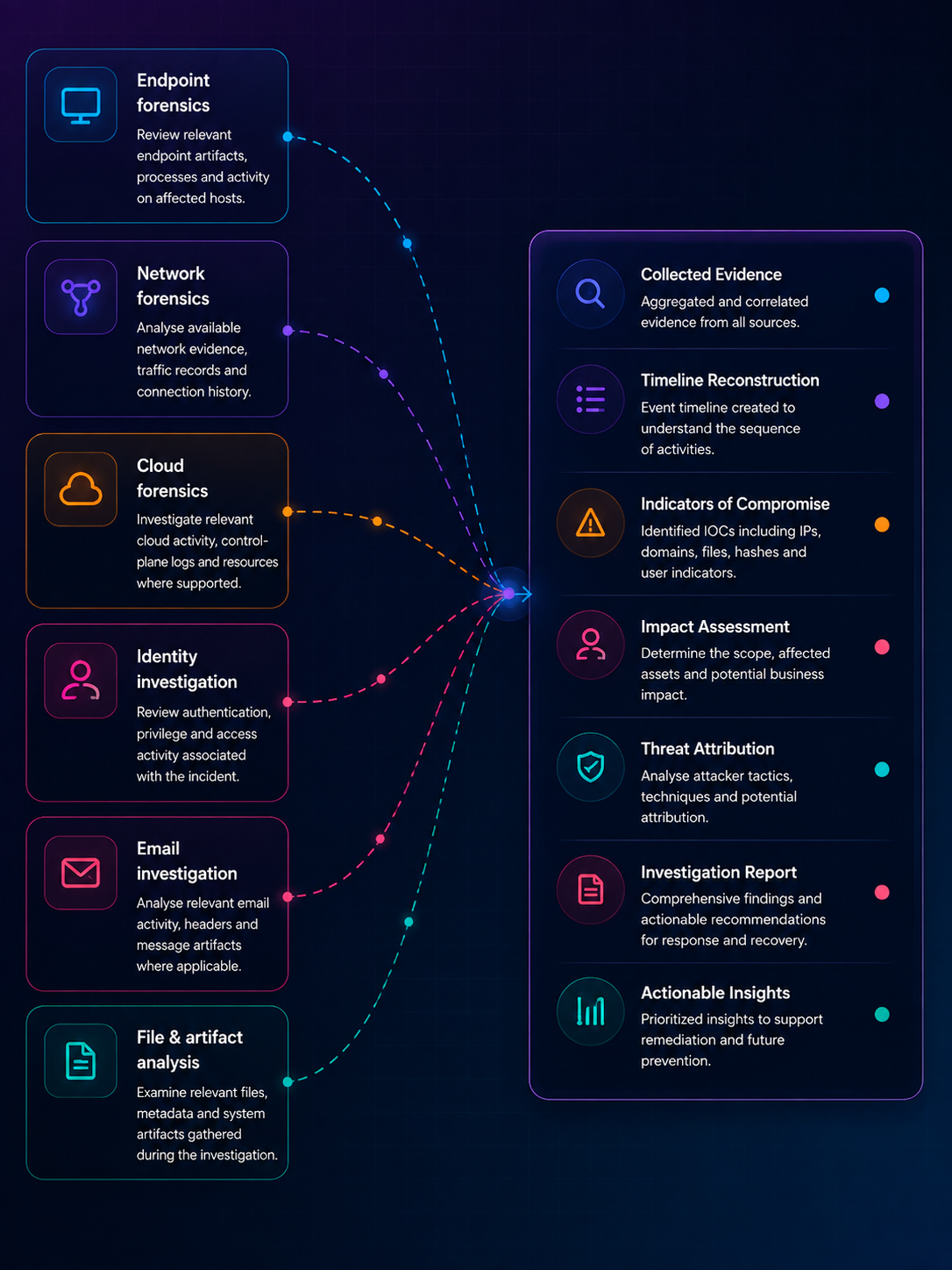
Cylentrix combines cyber incident response with digital forensics across all of them: endpoint forensics, network forensics, cloud forensics, identity and email investigation. Detection tooling raises the signal; incident response decides what it means and what happens next.
What an investigation produces
- Collected evidence, aggregated and correlated across the in-scope sources
- A reconstructed timeline showing the sequence of relevant activity
- Indicators associated with the incident, recorded for detection and blocking
- An impact assessment covering affected assets and potential business exposure
- Written findings with prioritised recommendations for response and recovery
What the engagement covers
-
Incident triage
Assess reported security events and help determine their potential severity, scope and priority.
-
Incident containment
Support actions designed to limit the impact of an incident and prevent it spreading further.
-
Threat investigation
Analyse available security information to understand suspicious activity and how it progressed.
-
Digital forensics
Examine relevant digital evidence to help establish what happened, where and when.
-
Malware & artifact analysis
Review relevant files, system artifacts or indicators associated with an incident where applicable.
-
Root cause analysis
Identify contributing factors and the weaknesses that allowed the incident to occur.
-
Recovery support
Support the transition from containment and investigation toward controlled service recovery.
-
Post-incident review
Document findings and identify improvements to security controls and response processes.
Understand what happened,
and reduce the impact
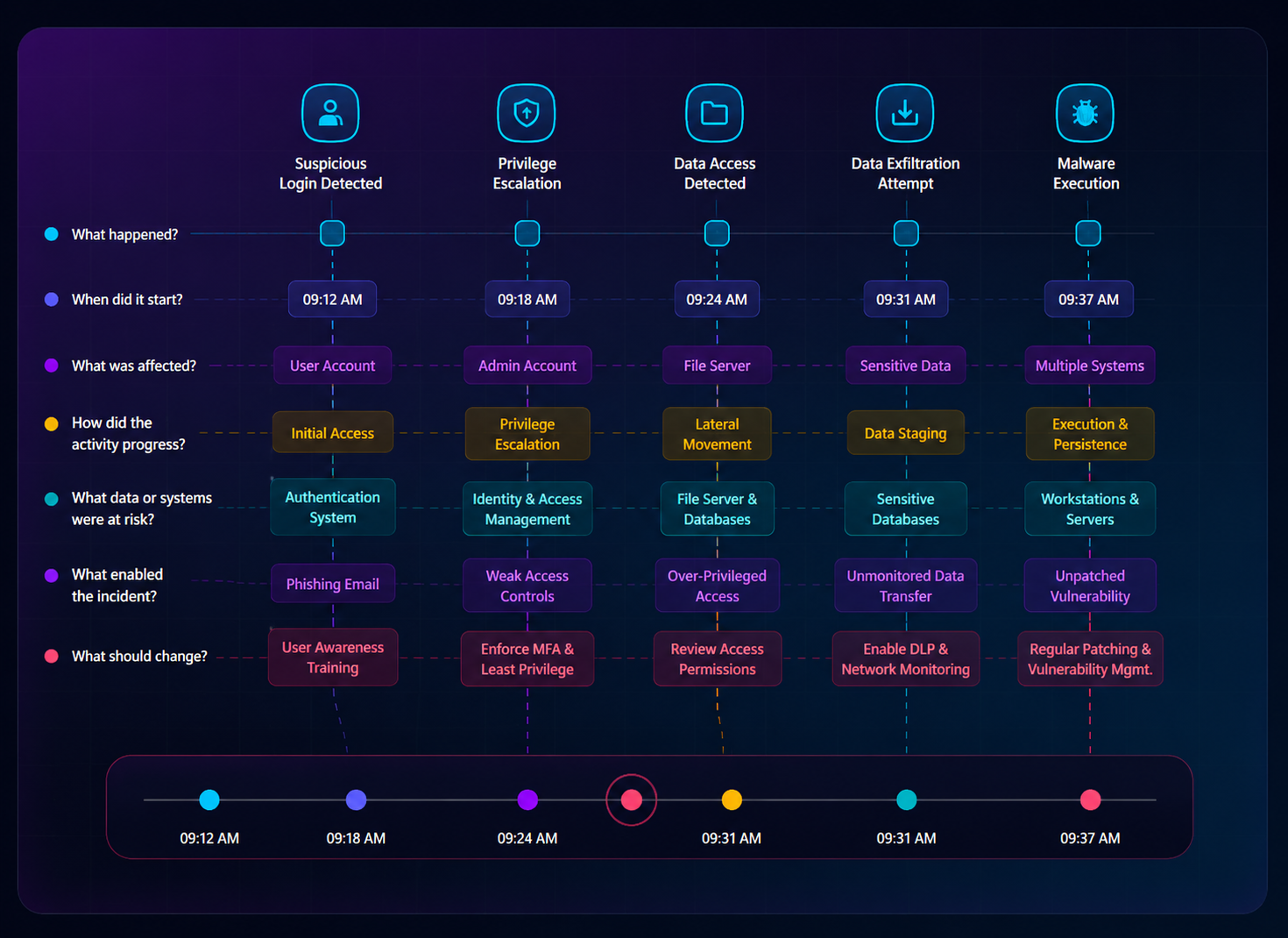
An investigation answers a fixed set of questions: what happened, when it started, what was affected, how the activity progressed, what was at risk, what enabled it, and what should change.
-
Timeline reconstruction
One agreed sequence of events, so leadership and technical teams work from the same account of the incident.
-
Impact assessment
A defined view of which systems, accounts and data were affected, supporting reporting and notification decisions.
-
Root cause analysis
The contributing factors behind the incident, so remediation addresses the cause rather than the symptom.
-
Security improvement
Prioritised recommendations that reduce the likelihood and cost of the next incident.
The goal is not only to close the immediate incident. Post-incident analysis exists so the same weakness is harder to exploit next time, and so the organisation responds faster and more confidently when the next security event arrives.
Incident readiness for
regulated industries
Every sector answers a different question first after an incident: what stopped, what was exposed, and what has to be reported. Cylentrix investigates with those obligations in view.
-

BFSI
Payment platforms and core banking records mean incidents must be contained, investigated and documented for regulators.
-

Healthcare
Clinical systems cannot simply be switched off, so containment protects patient care while evidence is preserved.
-

Manufacturing
Plant IT, OT links and supplier connections need containment sequenced so production is not halted further.
-

IT & Technology
Multi-tenant platforms, source control and cloud workloads scatter evidence across many environments at once.
-

Government
Citizen-facing services and inter-department systems call for disciplined investigation and clear reporting.
-

Retail
Store systems, e-commerce and payment flows need quick containment and clear findings before peak trading.
-

Education
Open campus networks and research data raise hard questions of scope, access and exposure to answer.
-

Logistics & Critical Infrastructure
Tracking, scheduling and control systems need recovery sequenced so evidence is not lost on the way back.
Prepare before
you need to respond
Practical guides from the Cylentrix security practice on incident readiness, investigation and recovery, written for the teams who will run the response.
-
 Playbook
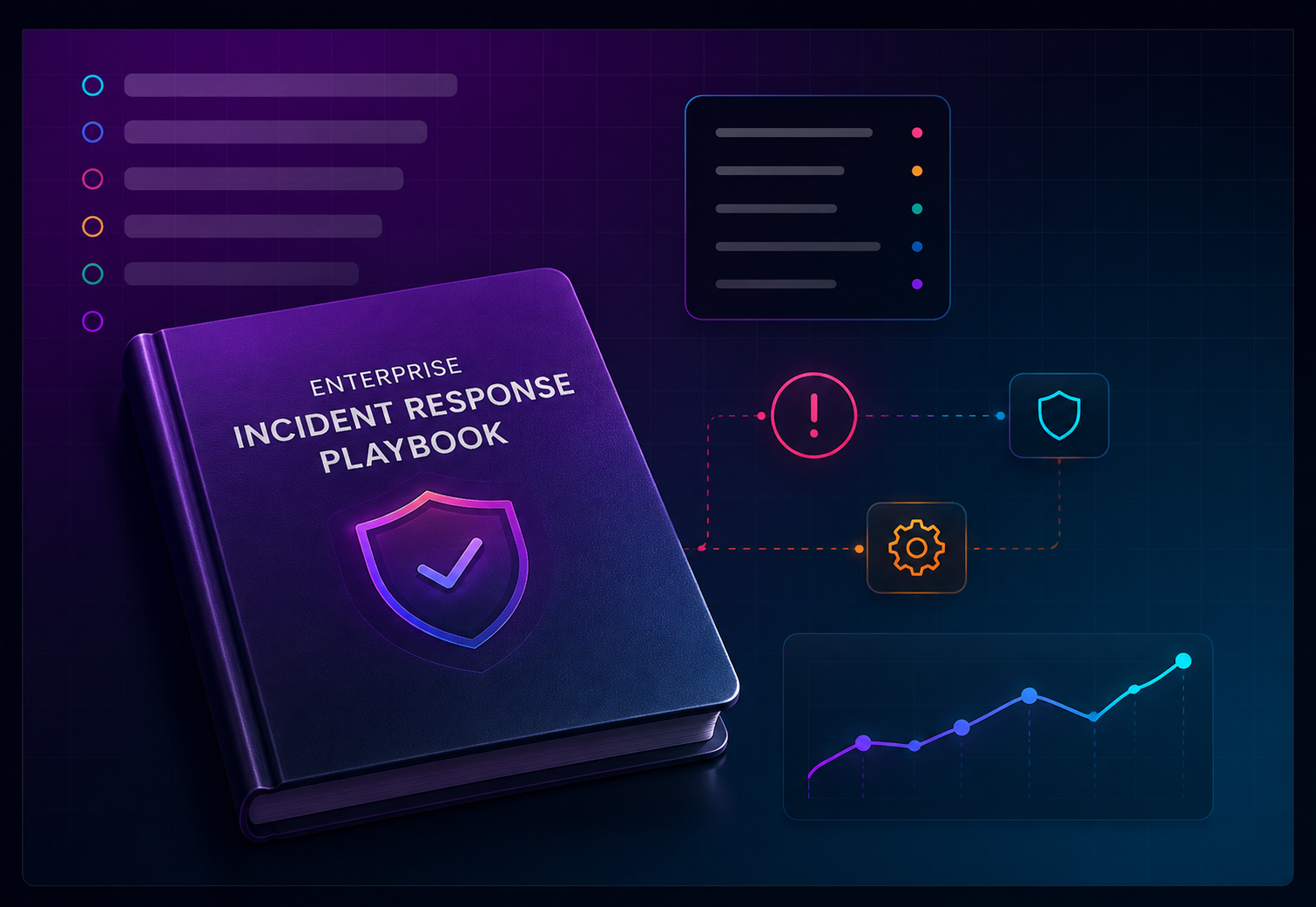
Enterprise Incident Response Playbook
Roles, escalation paths and decision points, structured across the full incident response lifecycle.
Read the playbook -
 Guide
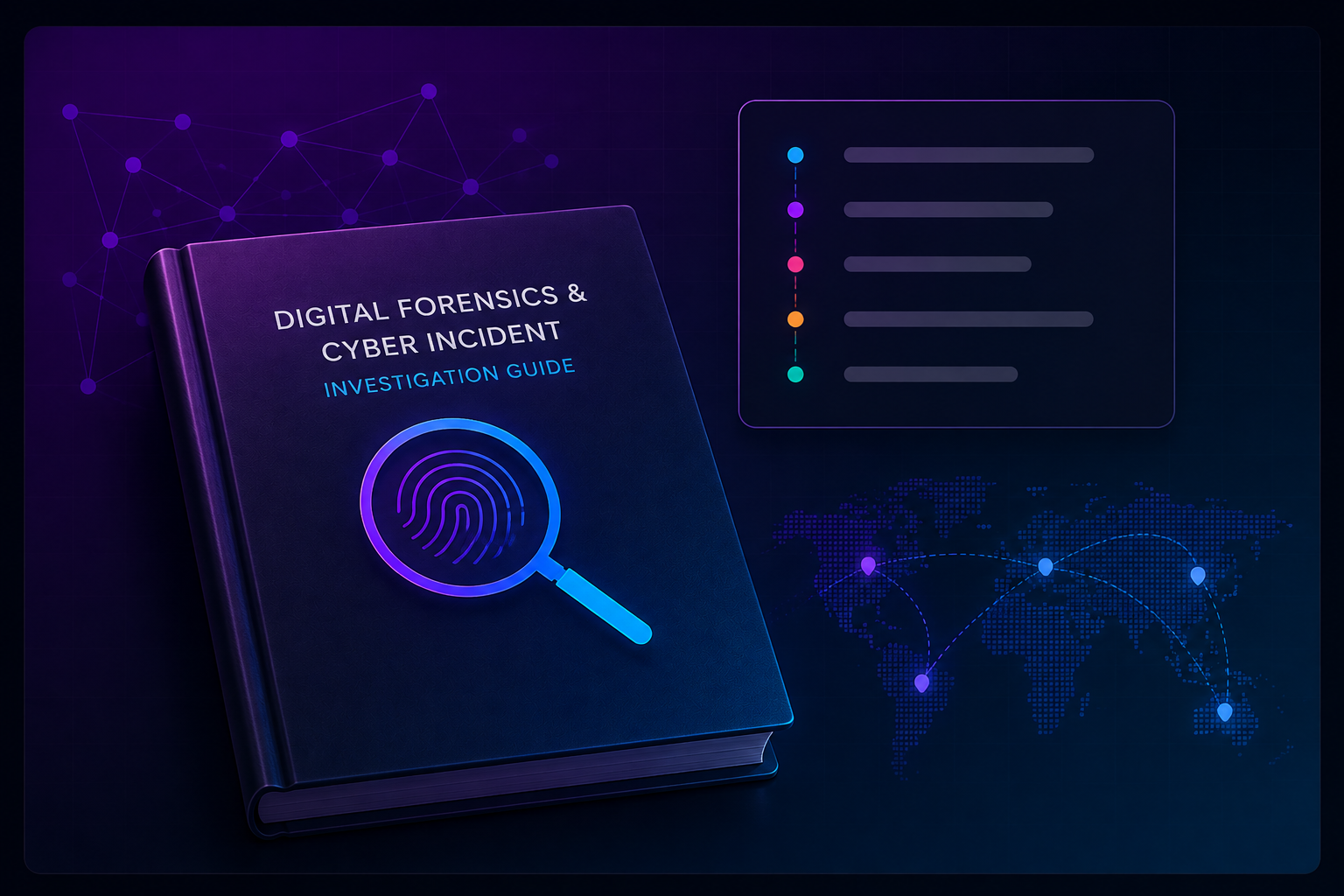
Digital Forensics & Cyber Incident Investigation Guide
What evidence exists across endpoint, network, cloud and identity sources, and how it is examined.
Read the guide -
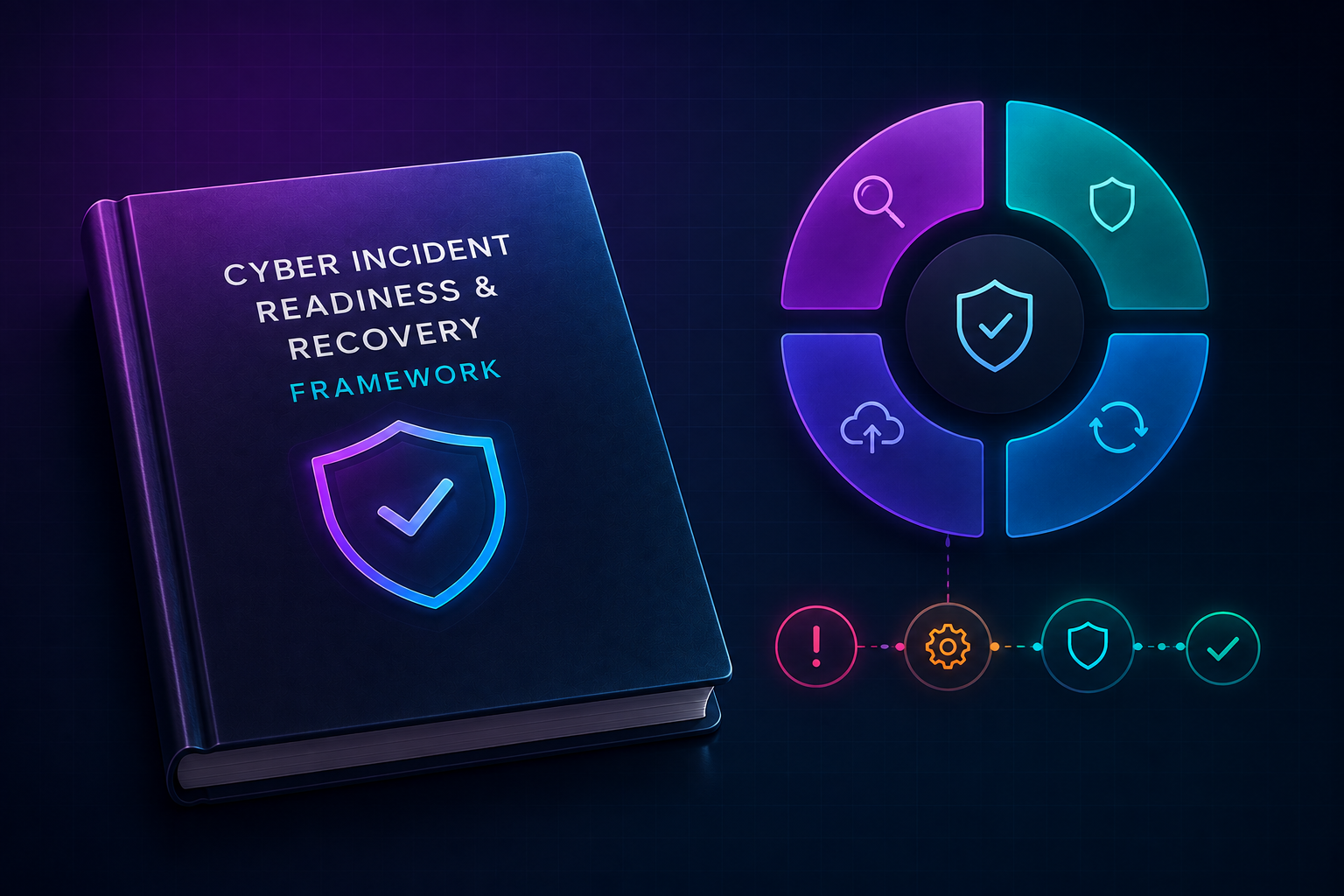 Framework
Cyber Incident Readiness & Recovery Framework
How to assess incident readiness and sequence recovery so restored systems stay clean.
Download the framework