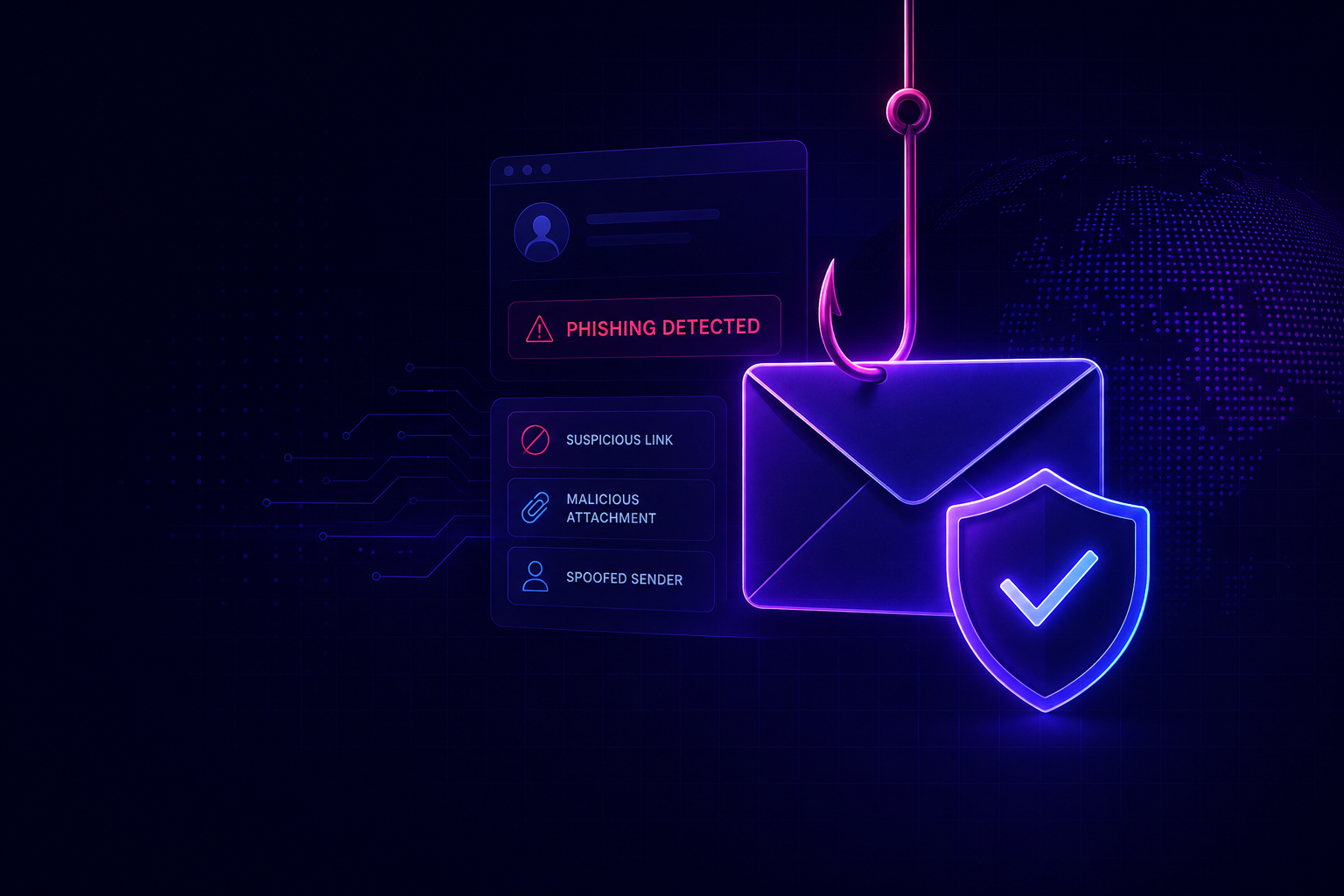

Protect users, business communications and sensitive information from phishing, malicious attachments, malicious URLs, impersonation and evolving email-borne threats. Cylentrix designs and operates Secure Email Gateway and email security deployments that inspect every inbound and outbound message against your policy, so email threat protection and business email compromise defence work together instead of in isolation.
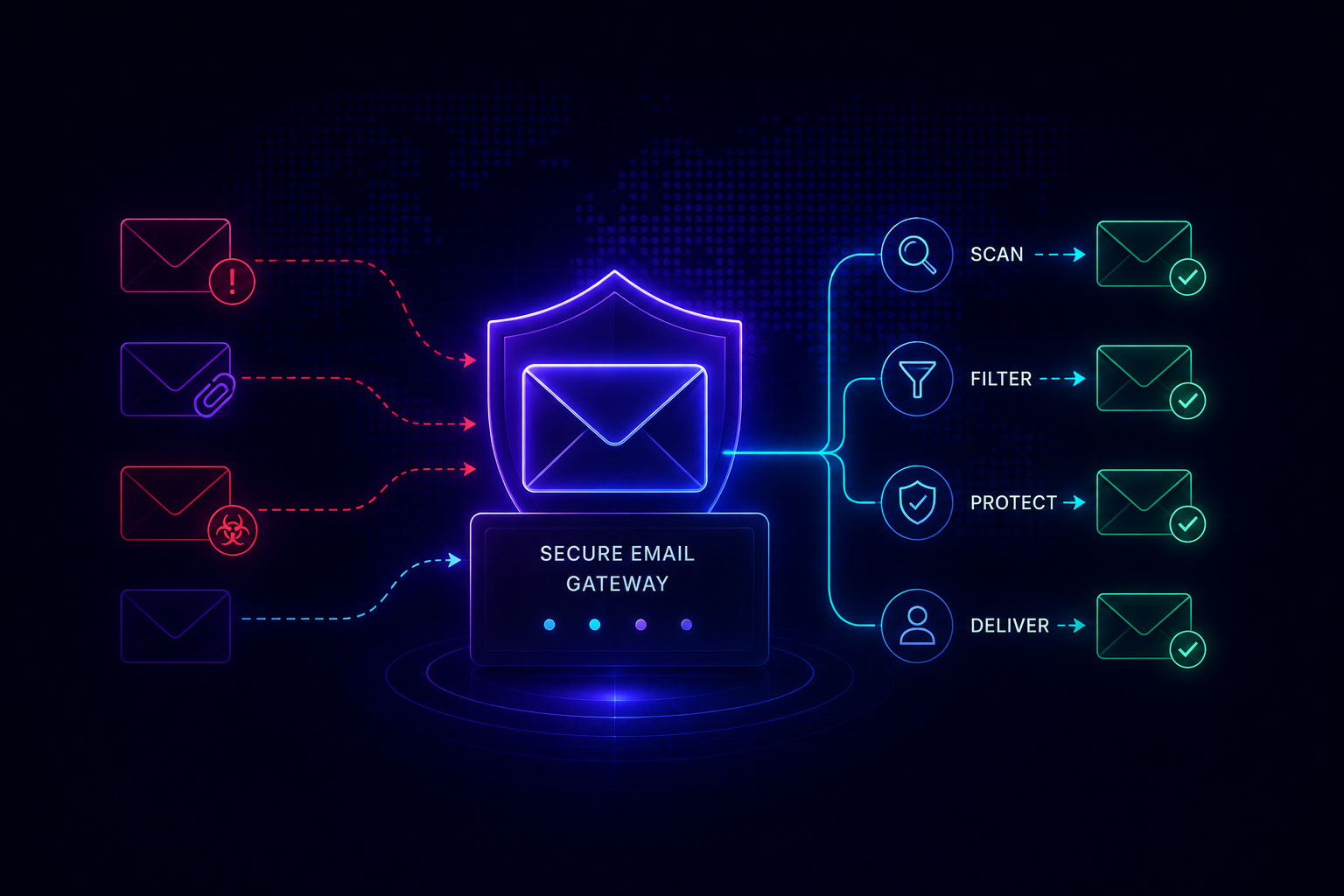
A Secure Email Gateway sits in the mail path and evaluates inbound and outbound traffic against configured security policies, so risky messages are handled before a user ever has to make a judgement call.
What is a Secure Email Gateway? It is an email security control that inspects messages entering and leaving the organisation. Sender and domain characteristics, reputation, message content, embedded URLs and attachments are each evaluated, and the resulting decision is to deliver, quarantine or block. Exact capabilities depend on the email-security platform selected and how it is configured for your environment.
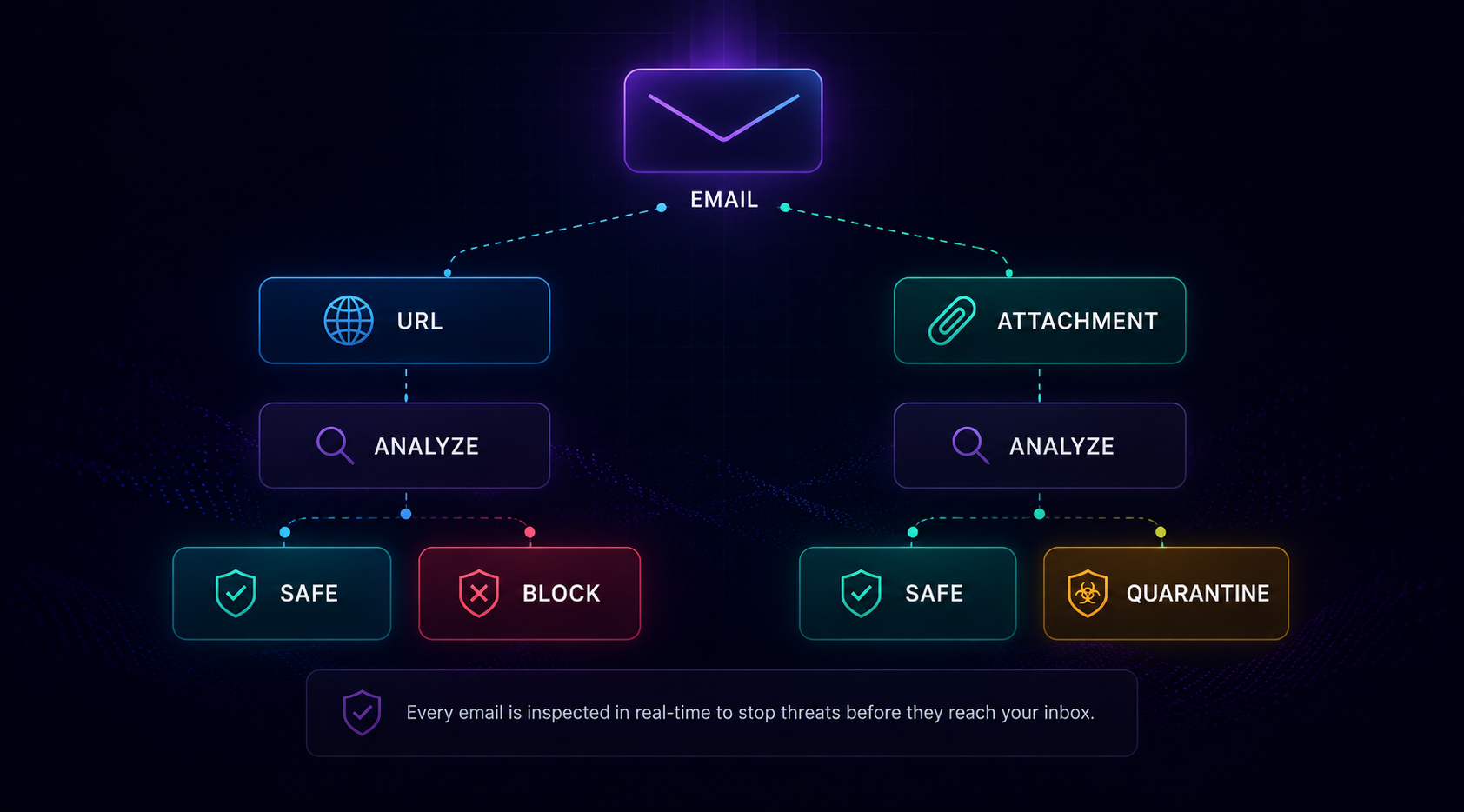
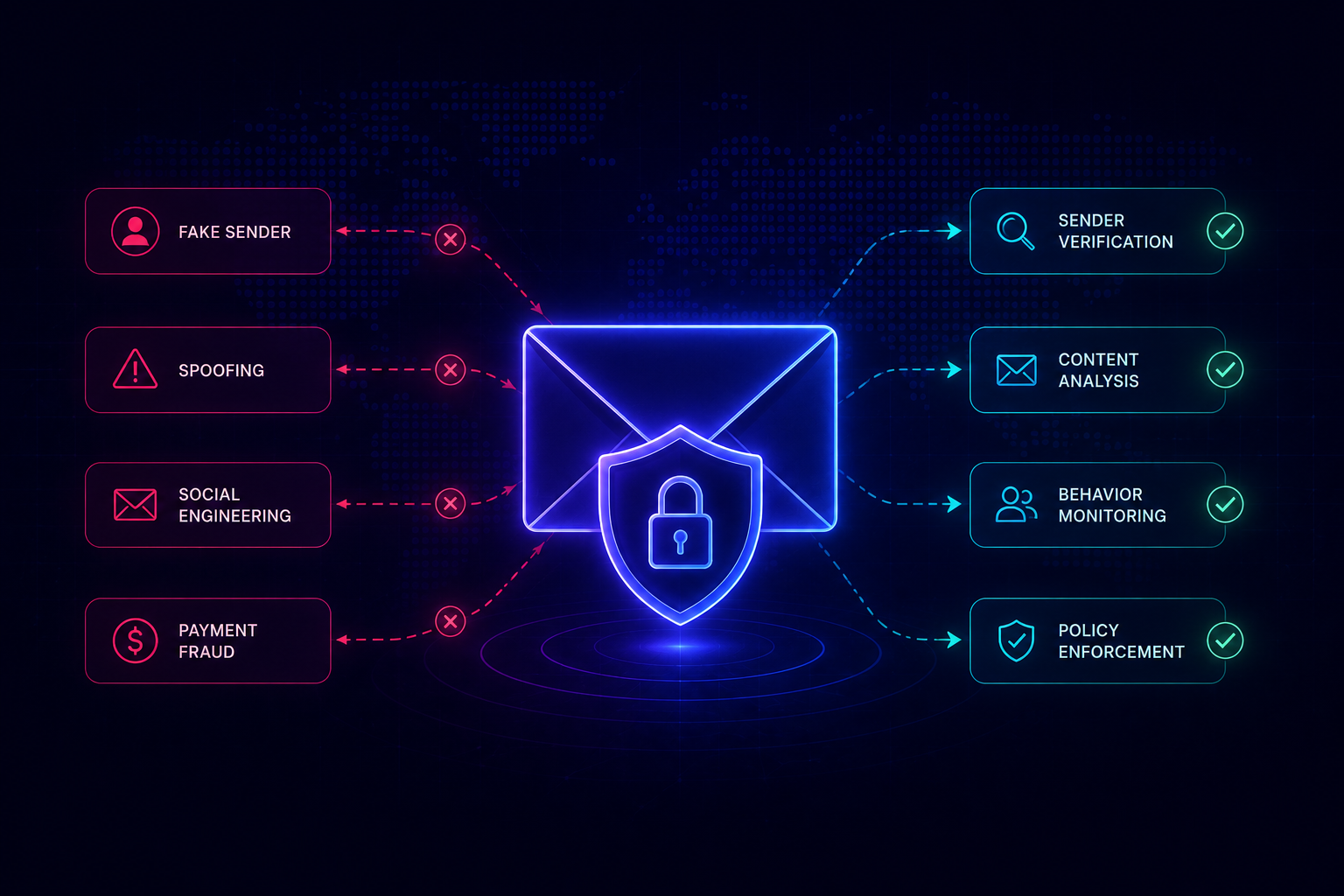
What the gateway protects against. Phishing, impersonation, malicious URLs, malicious attachments and business email compromise are evaluated together rather than as separate products, so a message that looks clean on one signal is still assessed on the rest.
Suspicious message patterns, sender reputation and threat intelligence are weighed together to identify deceptive email.
SPF, DKIM and DMARC results, lookalike domains and display-name mismatches help expose messages posing as trusted identities.
Links are checked for reputation and unsafe destinations at delivery and, where the platform supports it, at click time.
File type, structure and known malicious characteristics are inspected, with suspicious files stripped, held or quarantined.
Payment, supplier and executive requests are assessed on identity and context, because BEC often carries no link or malware.
Policies applied by group, domain or risk level, with quarantine review, alerting and reporting the security team can act on.
The same path runs for every message, every time. That consistency is what turns email security from a set of tools into an operational control.
Email enters the organisation's protected email environment.
Sender, domain, content, URLs and attachments are evaluated.
Relevant sender and identity signals are checked.
Security engines and configured policies assess potential risk.
Suspicious or malicious characteristics are identified.
Risky messages can be held or blocked according to policy.
Approved messages continue to the intended mailbox.
Security teams maintain visibility into email-security events.
Email security is measured in fraud that does not happen, hours the team does not lose, and questions leadership can answer with evidence.
Fewer deceptive messages reach users, so security depends less on any one person spotting the difference.
Invoice, supplier and approval conversations get stricter handling, where business email compromise does the most damage.
Tuned policies reduce false positives, so legitimate business mail keeps moving without constant release requests.
AI-assisted analysis helps process large volumes of email-security signals and prioritize suspicious activity for analyst review.
Reporting on detections, policy outcomes and quarantine activity gives auditors and leadership a clear record.
Outcomes depend on the platform selected, the policies configured and how they are maintained. No email security control identifies every threat, so gateway protection is designed to work alongside user awareness, monitoring and incident response.
Wherever approvals, payments, patient data or citizen records move by email, the mailbox becomes part of the control environment. Cylentrix designs email security for those environments.
Payment instructions, customer records and advisor communication make financial fraud and phishing a direct operational risk.
Patient information, referrals and vendor correspondence carry sensitive data that regulators expect to be protected in transit.
Supplier invoices and purchase correspondence are a favoured target for impersonation and altered payment details.
Large user environments, client communication and privileged accounts make credential phishing a persistent concern.
Citizen data and inter-department correspondence carry regulatory expectations and a high impersonation risk.
Customer data, marketing domains and high supplier volumes create both fraud exposure and brand-spoofing risk.
Thousands of student and staff mailboxes, with high turnover, make consistent policy and awareness essential.
Shipment, customs and contractor email keeps operations moving, so disruption or fraud carries immediate business impact.
Email security touches identity, endpoints, data and the network at once. Cylentrix works across all four, so the gateway is designed as part of your security architecture rather than bolted onto it.
Mail routing, DNS, endpoints and user identity are usually owned by different teams. We work across all of them.
Experience with Microsoft 365 and Google Workspace environments, hybrid mail flow and multi-domain estates.
The gateway is designed with authentication records, routing, exceptions and failure modes considered up front.
Email detections are routed into monitoring workflows so alerts reach analysts instead of accumulating unread.
Phishing usually targets credentials, so email controls are aligned with the identity controls behind them.
Outbound policy and email data protection are considered alongside inbound threat filtering, not after it.
When a phishing message lands, the response path, containment steps and evidence handling are already defined.
Policies are tuned to your risk profile and business tolerance, so protection does not arrive as blanket disruption.
Enterprise-focused implementation and support across three regions, under one delivery standard.
Cylentrix works with established email-security and enterprise technology platforms, selecting the right fit for each environment rather than a single default.
Proofpoint
Email security, anti-phishing and threat protection
Microsoft
Microsoft 365 email and collaboration security
Barracuda
Email protection, filtering and impersonation defence
Written by the Cylentrix security practice for the IT and security leaders who will run email security day to day.
Playbook
Layered phishing protection: gateway policy, identity controls, user reporting and what to do in the first hour.
Read the playbook
Prevention Guide
How BEC actually unfolds, which signals matter, and the payment and approval controls that reduce exposure.
Read the guide
Technical Guide
Deployment models, mail-flow design, SPF, DKIM and DMARC, policy tuning and quarantine operations.
Download the guideThe questions security and IT leaders ask before committing to a Secure Email Gateway, answered the way our engineers answer them.
A Secure Email Gateway (SEG) is an email security control that inspects inbound and outbound email before it reaches or leaves a mailbox. It evaluates sender and domain characteristics, message content, embedded URLs and attachments against configured security policies, then delivers, quarantines or blocks the message. Exact capabilities depend on the email-security platform selected and how it is configured.
Phishing protection works by combining several signals rather than one test: sender and domain authentication results, sender reputation, message structure and language patterns, embedded link destinations, attachment behaviour and known threat intelligence. Messages showing suspicious combinations of signals can be blocked, quarantined or flagged for user caution according to policy. No email security control detects every phishing attempt, so gateway controls are usually paired with user awareness and monitoring.
Business Email Compromise (BEC) is targeted email fraud in which an attacker uses a compromised or impersonated business identity, often an executive, finance contact or supplier, to request payments, data or account changes. BEC messages frequently carry no malware or malicious link, which is why identity signals, communication context and payment-related policy controls matter as much as content filtering.
Yes. Attachments can be inspected for file type, structure and known malicious characteristics, and suspicious files can be held for review, stripped or quarantined under policy. URLs can be checked against reputation and threat-intelligence sources, and links can be rewritten so the destination is evaluated at the time the user clicks. These controls reduce risk substantially but cannot be described as complete protection.
Impersonation protection evaluates whether a message is genuinely from the identity it appears to represent. It checks domain authentication records such as SPF, DKIM and DMARC, looks for lookalike domains and display-name mismatches, and compares the sender against known executives, suppliers and internal contacts. Messages that resemble a trusted identity without matching its verified characteristics can be flagged, quarantined or blocked.
Yes. Policies are normally defined per organisation and can differ by group, mailbox, domain or risk level. Typical policy decisions include how strictly to treat unauthenticated senders, which attachment types are allowed, how quarantined mail is reviewed and released, what warnings users see on external mail, and which events raise alerts to the security team.
AI-assisted analysis helps security teams process large volumes of email-security signals and prioritize suspicious activity. It is useful for pattern analysis across many messages, sender behaviour comparison, anomaly identification and alert enrichment. Decisions on ambiguous or high-impact cases still involve configured policy and human review, and AI does not replace email-security analysts.
Cylentrix assesses the current email environment and risk profile, designs the email-security architecture, helps select and deploy a suitable Secure Email Gateway platform, configures policies for phishing, impersonation, attachments and URLs, integrates alerts with monitoring and incident response, and supports ongoing tuning, quarantine management and reporting across India, USA and Singapore.
Strengthen email security, reduce phishing risk and protect users from malicious messages, impersonation and business email compromise. Tell us about your email environment and a Cylentrix security engineer will come back with a practical next step.
Share a few details and we will respond with scope, options and indicative pricing.
Your details are used only to respond to this enquiry.