Cylentrix delivers enterprise telecom services that bring Internet Leased Line, managed SD-WAN, MPLS, enterprise Wi-Fi, branch and last-mile connectivity, WAN optimization and cloud connect into one network architecture and one SLA. Carrier-neutral design across every major operator; a 24×7 NOC watches every link for business continuity. Enterprise connectivity starts with an assessment of the network you already run, not a bandwidth quote.
Carrier partnerships across every major operator, enterprise hardware alliances with Cisco, VMware, Hewlett Packard Enterprise, Dell Technologies and Lenovo, and the compliance certifications behind every managed connectivity engagement.

Take one circuit to fix a single site, or combine services into a managed connectivity programme under a single SLA. Each links to full technical detail, scope and deliverables.
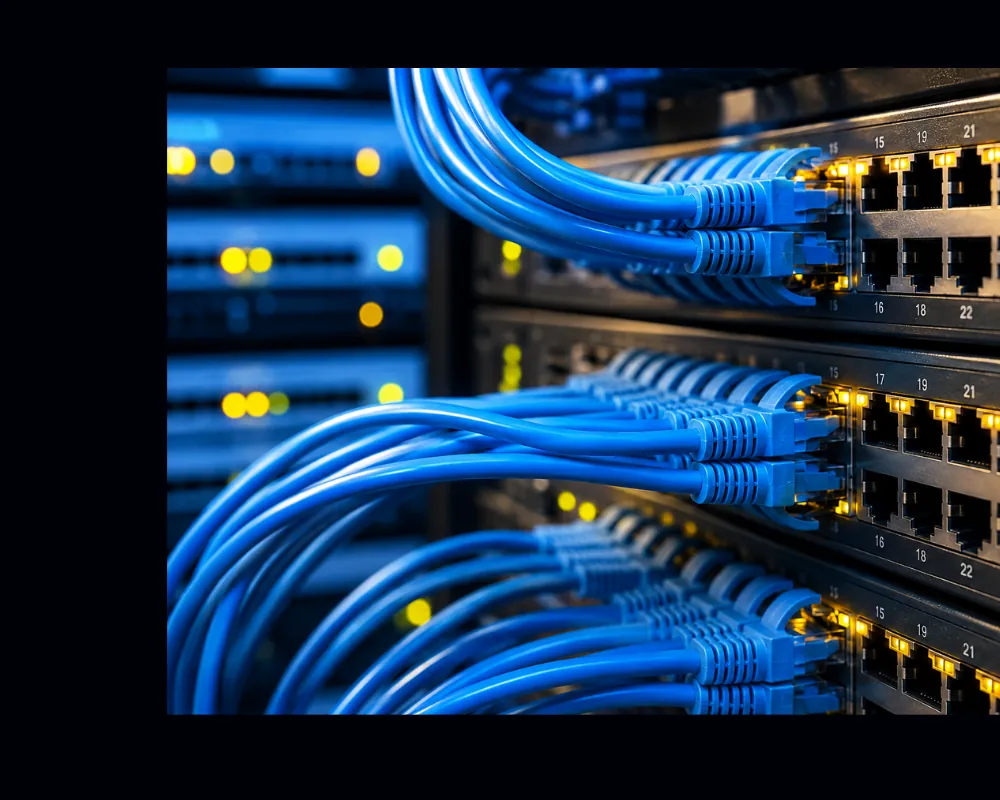
Dedicated, uncontended 1:1 bandwidth with symmetric upload and download, static IP pools, BGP support and a 99.95% uptime SLA backed by proactive NOC monitoring.
Learn more

Application-aware routing across dual ISPs, MPLS and broadband underlays. Centralised policy, zero-touch branch provisioning and sub-second failover.
Learn more

Private any-to-any WAN connecting offices, factories and data centres with QoS classes that keep voice, video and ERP traffic ahead of bulk data.
Learn more
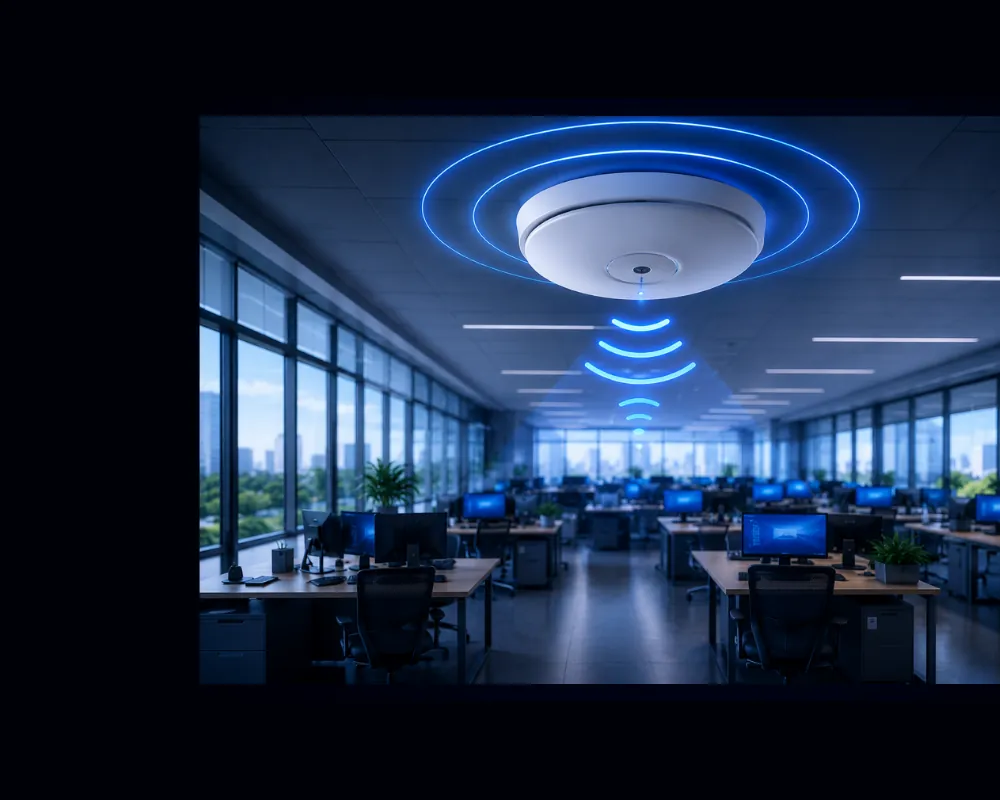
Controller-based campus and warehouse wireless: RF surveys, heat-map design, seamless roaming, guest isolation and WPA3-Enterprise authentication.
Learn more

Dedicated Layer-2 circuits between sites and data centres for deterministic latency, replication traffic and DR, delivered over fiber or licensed wireless.
Learn more

Hub-and-spoke connectivity linking headquarters to branches over a single managed service, with per-spoke bandwidth control and central visibility.
Learn more
Dedicated fiber pairs for enterprises that need full control of capacity, wavelengths and encryption between campuses and data centres.
Learn more

Route planning, trenching, blowing and splicing for private fiber builds, campus backbones and last-mile extensions, documented to as-built standard.
Learn more

Carrier-grade SIP trunks and hosted voice with number porting, DID ranges and QoS-protected call paths across your WAN.
Learn more

High-throughput business broadband and dedicated internet for offices that need reliable connectivity without a full leased-line commitment.
Learn more

Cloud contact-centre platforms with IVR, call recording, CRM integration and elastic agent capacity, delivered on monitored connectivity.
Learn more

24×7 monitoring of links, routers and paths from our Network Operations Centre: proactive fault detection, carrier coordination and RCA on every incident.
Learn moreSelect a scenario to see how the problem shows up in a real enterprise network, and the specific solution we engineer to fix it.
Broadband looks cheap until the contention hits. Shared bandwidth collapses during peak hours, upload speeds throttle video calls and cloud backups, and there is no SLA when the link goes down.
A dedicated 1:1 Internet Leased Line with symmetric bandwidth, static IPs and BGP options, backed by a 99.95% uptime SLA, proactive NOC monitoring and a defined restoration clock.
Branches run on single links with manual failover. When the primary drops, users wait; when it saturates, nobody can say which application ate the bandwidth.
Managed SD-WAN with dual ISP underlays, application-aware routing and sub-second failover. Critical apps get priority paths, and the whole estate is managed from one controller.
Site-to-site VPNs over the public internet deliver unpredictable latency and jitter, breaking voice quality, ERP sessions and replication windows between offices and data centres.
Private MPLS connectivity with any-to-any topology and QoS classes engineered per traffic type, so voice, video and transactional traffic stay deterministic across every site.
Consumer-grade access points dropped wherever cable reached. Dead zones on the shop floor, roaming that disconnects on every handoff, and guests on the same network as finance.
RF-surveyed, controller-based enterprise Wi-Fi with heat-map placement, seamless roaming, WPA3-Enterprise authentication and isolated guest and IoT segments.
Every new branch is a new procurement cycle: different carrier, different router, different escalation path. Thirty sites means thirty ways a link can fail unnoticed.
Standardised branch connectivity: the right last mile per location, managed CPE, central monitoring and one escalation path, so a new site comes online in weeks, not quarters.
The core network is solid; the last mile is not. A single fiber cut at one location takes a warehouse or a clinic offline with no alternate path and no visibility into restoration.
Engineered last-mile redundancy: diverse fiber routes, licensed wireless or 4G/5G backup matched to each site risk profile, with automatic failover validated by drill, not assumption.
The first alert about a down link comes from an angry user. Utilisation, latency and packet loss stay invisible until they become an outage or a missed replication window.
24×7 NOC monitoring of every link, router and path: AI-assisted anomaly detection and threshold alerting, proactive carrier tickets, monthly utilisation and latency reporting, and RCA on every incident.
Connectivity is the single point of failure nobody drills. One carrier outage stalls payments, cloud apps and voice at once, and the DR plan assumes a network that no longer exists.
Continuity-grade design: dual carriers with BGP or SD-WAN failover, cloud connect as an alternate path and documented recovery runbooks tested against real failover drills.
A seven-stage delivery cycle with defined artefacts at every stage, so you always know what has been done, what is next, and who owns it.
Inventory circuits, carriers, routers, contracts and traffic flows. Establish what you actually pay for before anything is recommended.
Measure utilisation, latency, jitter and single points of failure per site. Findings ranked by uptime risk and business impact.
Target-state network architecture, carrier selection and phased roadmap. Deliverables include HLD, LLD and site-wise BOM.
Circuit provisioning, managed CPE rollout and controlled cutovers per site, with change governance and validation testing.
Every link and device into the 24×7 NOC, with alerting tuned to your traffic profile and SLA-backed triage.
Fault isolation, carrier escalation and restoration under agreed authority levels, with RCA delivered after every incident.
Quarterly review of utilisation, latency and redundancy. Capacity and routing updated as sites, apps and traffic move.
Cylentrix owns carriers, CPE, monitoring and outcomes end to end. Suited to organisations without an in-house network team.
Your team keeps ownership and platform; we supply 24×7 NOC coverage, carrier management and escalation muscle.
Fixed-scope design and implementation covering SD-WAN rollout, MPLS migration or branch expansion, with handover and documentation.
Carrier-neutral architecture review, contract and bandwidth optimisation, and a standby escalation retainer with guaranteed response.
A hospital and a factory face different uptime constraints, different traffic patterns and different regulators. We engineer connectivity to the sector, not to a template.

Plant-to-cloud connectivity, IT/OT network segregation and redundant last mile engineered around production uptime.

Always-on links for HIS, PACS and telemedicine, with diverse paths so a fiber cut never reaches patient care.

Low-latency, audit-ready branch connectivity with dual-carrier failover for core banking and payment traffic.

POS-grade store connectivity with SD-WAN, 4G/5G backup and central visibility across every outlet.

High-density campus Wi-Fi, hostel and classroom bandwidth management and safe, filtered student internet.

Client-contract-grade leased lines, BGP multi-homing and cloud connect for delivery centres and DR sites.

Data-localisation-aware WANs, secure inter-office connectivity and documented SLAs for citizen-facing services.

Warehouse Wi-Fi, hub-and-spoke branch links and reliable connectivity for tracking, WMS and EDI traffic.
Partnerships with every major Indian carrier, so circuit selection at each site follows coverage, diversity and price rather than a single-operator quota. Network hardware is designed and delivered on Cisco, VMware, Hewlett Packard Enterprise, Dell Technologies and Lenovo platforms.
Tata, Airtel, Jio and Vi circuits selected per site for coverage, path diversity and restoration performance, under one Cylentrix SLA.
Cisco and VMware SD-WAN edge platforms with BGP, QoS and dual-ISP failover designed, deployed and managed by certified engineers.
HPE Aruba and Cisco wireless with controller-based roaming and RF planning, on switching and access infrastructure from Dell Technologies and Lenovo.
Engineers hold current CCNP, Aruba ACMP and vendor SD-WAN credentials across routing, wireless and WAN, revalidated on each cycle.
IT services, manufacturing, energy, pharmaceuticals, hospitality, infrastructure and education groups rely on us for managed security, managed IT and connectivity.




















Nine differences that show up in delivery, not in a capability matrix.
A staffed NOC watching every link and router across follow-the-sun shifts, not an inbox read the next morning.
Current Cisco, Aruba and SD-WAN certifications across routing, wireless and WAN platforms, kept live through recertification.
We are not a single-operator reseller. Each site gets the carrier with the best coverage, diversity and price.
A named architect owns your topology end to end, from carrier selection to QoS policy, across every change.
Written uptime, response and restoration targets by severity, reported monthly, with commercial consequences attached.
Proactive detection, parallel carrier escalation and defined restoration clocks, with RCA after every incident.
Architectures sized for the sites and bandwidth you will run in three years, not just the ones you have today.
Field engineering reach across metros and tier-2 cities for site surveys, installation and hardware replacement.
Private paths into AWS, Azure, GCP and colocation designed alongside the WAN rather than bolted on later.
Published by the Cylentrix Research Office: field data from NOC operations, WAN transformation projects and enterprise connectivity programmes.

Whitepaper
A strategic report on where enterprise WANs, SD-WAN adoption, 5G last mile and AI-assisted network operations are heading.

Strategy report · PDFRead report
Research Report
Latency, jitter and availability data across carriers, cities and last-mile types, drawn from Cylentrix NOC telemetry.

Annual studyRead research
Guide
Bandwidth sizing, contention, SLA fine print and BGP options, with a checklist for comparing ILL quotes on equal terms.

Buyer's guideRead guide
Case Study
How a national retailer moved 140+ stores from broadband chaos to managed SD-WAN with central policy and 4G backup.

Retail · IndiaRead case study
Executive Brief
The board-level view: uptime economics, carrier diversity, cloud connect and what to demand from a telecom partner.

8 pages · Board levelRead brief
Technology Report
Where AIOps genuinely improves fault prediction, capacity planning and NOC triage, and where human engineers still decide.
Technology reportRead reportThe questions network and IT leaders ask us most often, answered directly. If yours is not here, a 30-minute call with a network architect will cover it.
Ask a specific questionAn Internet Leased Line (ILL) is a dedicated, uncontended internet circuit delivered exclusively to your organisation with symmetric upload and download speeds, static IP addresses and an enterprise SLA. Because the bandwidth is 1:1 rather than shared, performance stays consistent through peak hours, which is why ILL is the standard for offices running cloud applications, VoIP and video conferencing.
Broadband is shared, contended bandwidth: speeds are “up to” a headline figure, upload is far slower than download, and there is usually no uptime SLA. A leased line is dedicated 1:1 bandwidth with symmetric speeds, static IPs, BGP options and a contractual SLA covering uptime and restoration time. Broadband suits small offices and backup links; leased lines carry business-critical traffic.
SD-WAN (software-defined wide area network) is an overlay that routes traffic intelligently across multiple underlying links: leased line, broadband, MPLS or 4G/5G. It steers each application over the best available path, fails over in under a second when a link degrades, and manages every branch from a central controller, which typically improves performance while reducing per-site cost.
Yes. Cylentrix designs and manages MPLS networks with any-to-any topology and QoS classes engineered per traffic type, so voice, video and ERP traffic stay deterministic between offices, factories and data centres. We also design hybrid WANs where MPLS carries critical traffic and SD-WAN over internet handles the rest.
Yes. Multi-site connectivity is core to our practice: hub-and-spoke P2MP, MPLS, and managed SD-WAN across dozens or hundreds of locations. We handle carrier selection per site, managed routers, central monitoring and a single escalation path, so every branch behaves as one network rather than thirty separate contracts.
Yes. Redundancy is engineered per site risk profile: dual carriers on diverse last-mile paths, BGP multi-homing or SD-WAN failover, and licensed wireless or 4G/5G backup where fiber diversity is not available. Failover is validated with drills, not assumed from a diagram.
Any organisation where downtime has a cost: manufacturing plants, hospitals, banks and NBFCs, retail chains, schools and universities, IT and ITES delivery centres, government departments, logistics networks, data centres and hotels. Cylentrix engineers connectivity to each sector’s uptime constraints, traffic patterns and regulatory context.
Yes. Our Network Operations Centre monitors every managed link, router and path 24×7×365: threshold alerting on utilisation, latency and packet loss, proactive carrier tickets often raised before users notice, monthly SLA reporting and root-cause analysis after every incident.
Yes. We design private, low-latency paths into AWS, Azure, Google Cloud and colocation facilities, via direct connect services, cloud on-ramps or optimised internet breakout, and integrate them into your WAN routing and failover design so cloud is part of the network rather than an exception to it.
A connectivity assessment typically starts within five working days of scoping. New leased-line circuits generally deliver in two to six weeks depending on carrier feasibility at the site; SD-WAN overlays on existing links can go live in days; multi-branch rollouts are phased site by site with zero-touch provisioning. Timelines are committed in writing during design.
The assessment is a working session, not a sales call. A Cylentrix network architect reviews your current circuits, routing and utilisation, identifies the gaps that threaten uptime, and gives you a prioritised view of risk and cost, whether or not you engage us afterwards.
Tell us what you are trying to connect. We will match you with the right network architect.