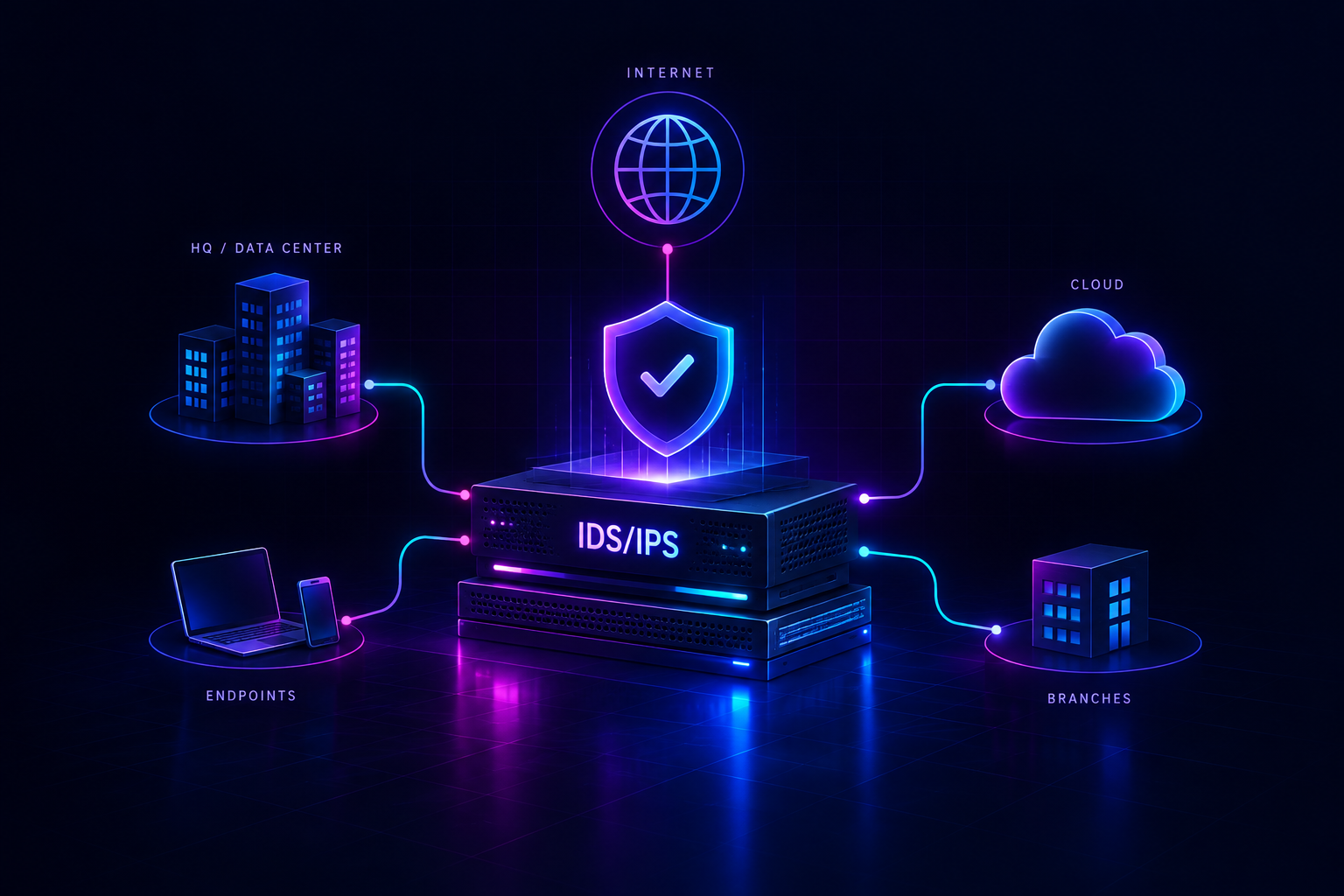

Detect suspicious network activity, identify potential threats and help prevent malicious traffic with intelligent intrusion detection and prevention controls. Cylentrix designs, deploys and manages IDS/IPS services that give security teams real network visibility: continuous network security monitoring, signature and anomaly based network threat detection, and policy-driven threat prevention positioned where your traffic actually flows.
Firewalls decide which connections are allowed. IDS/IPS inspects the traffic that gets through and looks for what should not be there.
An Intrusion Detection System (IDS) monitors network traffic and identifies suspicious or potentially malicious activity, generating alerts so security teams can investigate. It is a visibility control: it observes, correlates and reports.
An Intrusion Prevention System (IPS) goes a step further. Deployed inline in the traffic path, it applies prevention controls that can block or disrupt identified malicious traffic according to the security policies you configure.
Cylentrix helps organisations deploy IDS/IPS capabilities as part of a broader network-security strategy: mapping traffic flows, deciding where inspection belongs, tuning detection and prevention policies to the environment, and integrating alerts into the monitoring and response workflows your teams already run.
Detection and prevention outcomes depend on deployed technology and configured policy
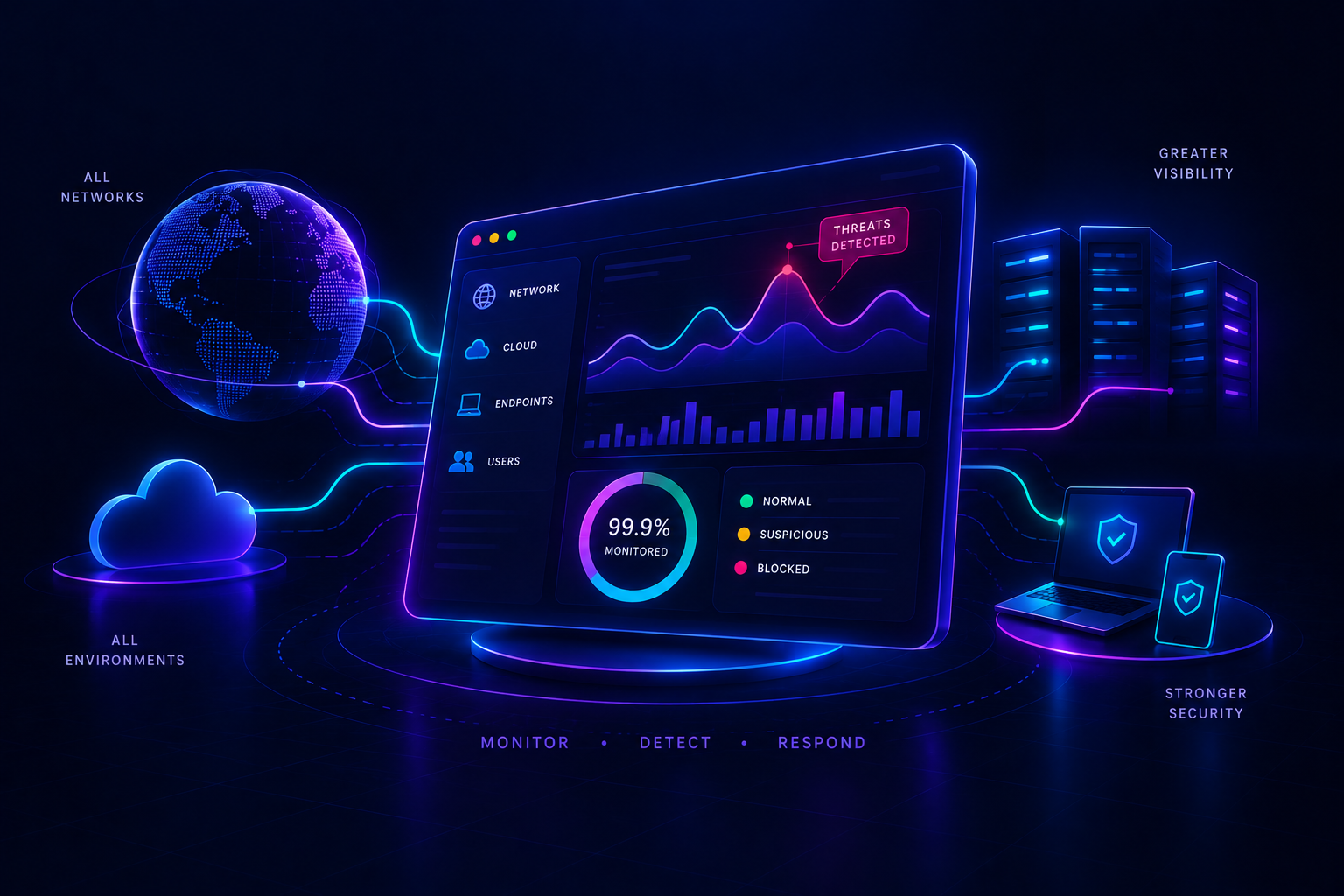
See what is actually crossing your network, not only what the perimeter was configured to allow.
Identify known attack patterns, rule violations and unusual behaviour as traffic is inspected.
Analyse protocols and communication patterns to separate normal activity from activity worth investigating.
Block or disrupt identified malicious traffic where the deployment is inline and policy permits.
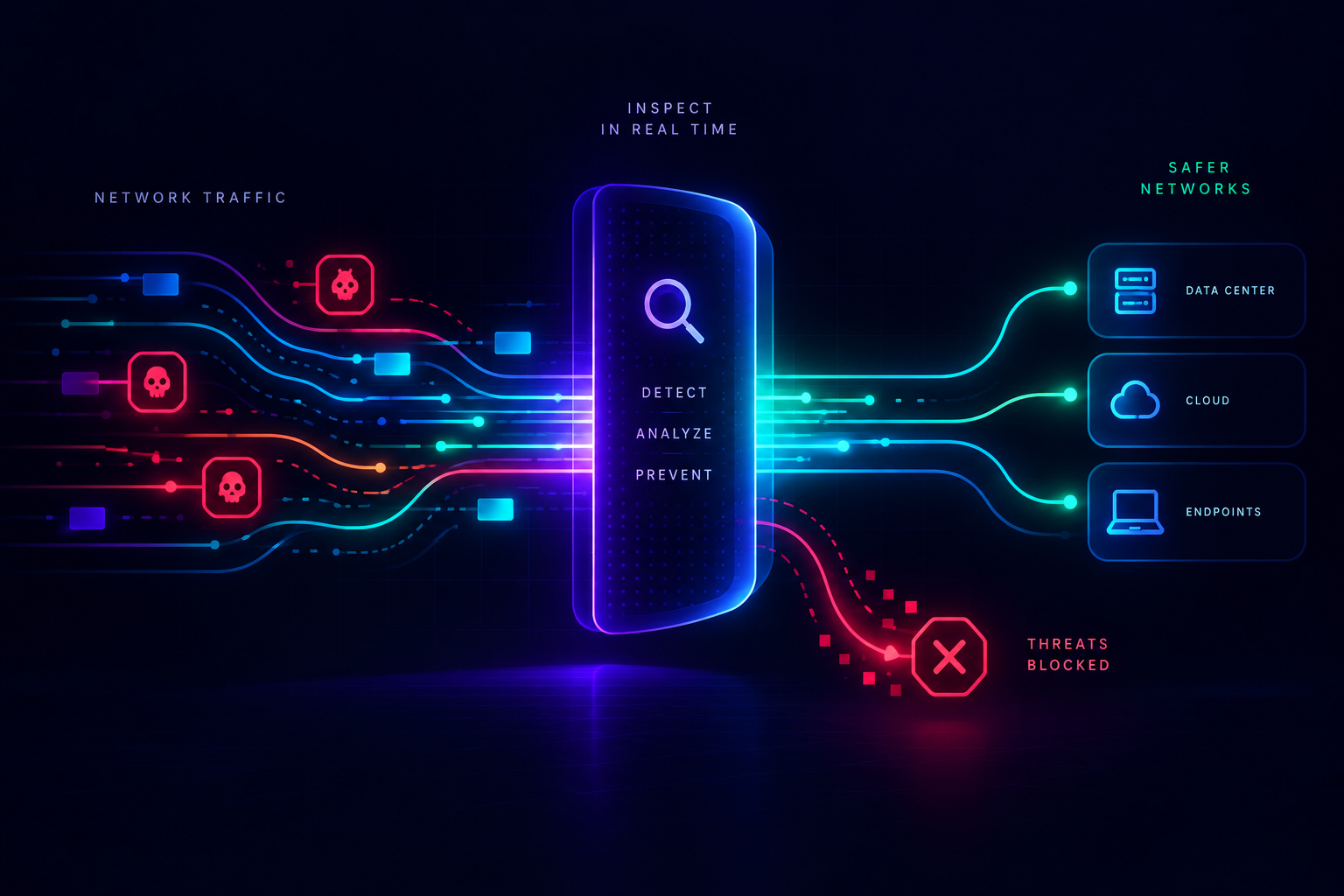
Every flow follows the same route through inspection. What changes is the decision at the end of it, and what the policy is allowed to do about that decision.
Traffic reaches the point where inspection has been positioned.
Packets, sessions and protocol behaviour are examined against the configured ruleset.
Signatures, baselines and policy context are applied to what was observed.
Activity is classified as legitimate, suspicious or malicious, with a confidence level.
The classification is matched to the action the policy defines for it.
The activity is not conclusively malicious, so it is raised for analyst review with the supporting traffic context.
Where the deployment is inline and the policy allows it, the session can be blocked, dropped or reset.
The overwhelming majority of traffic. It passes through without interruption and is simply observed.
Prevention behaviour is not universal. Whether traffic can be blocked, dropped or reset depends on the deployed IDS/IPS technology, where it sits in the path and the policies the organisation has configured. Detection-only deployments alert without acting, which is often the correct choice on sensitive production paths.
Inspection only sees the traffic that reaches it. Deciding where IDS/IPS sits is the single most consequential design choice in the whole deployment.
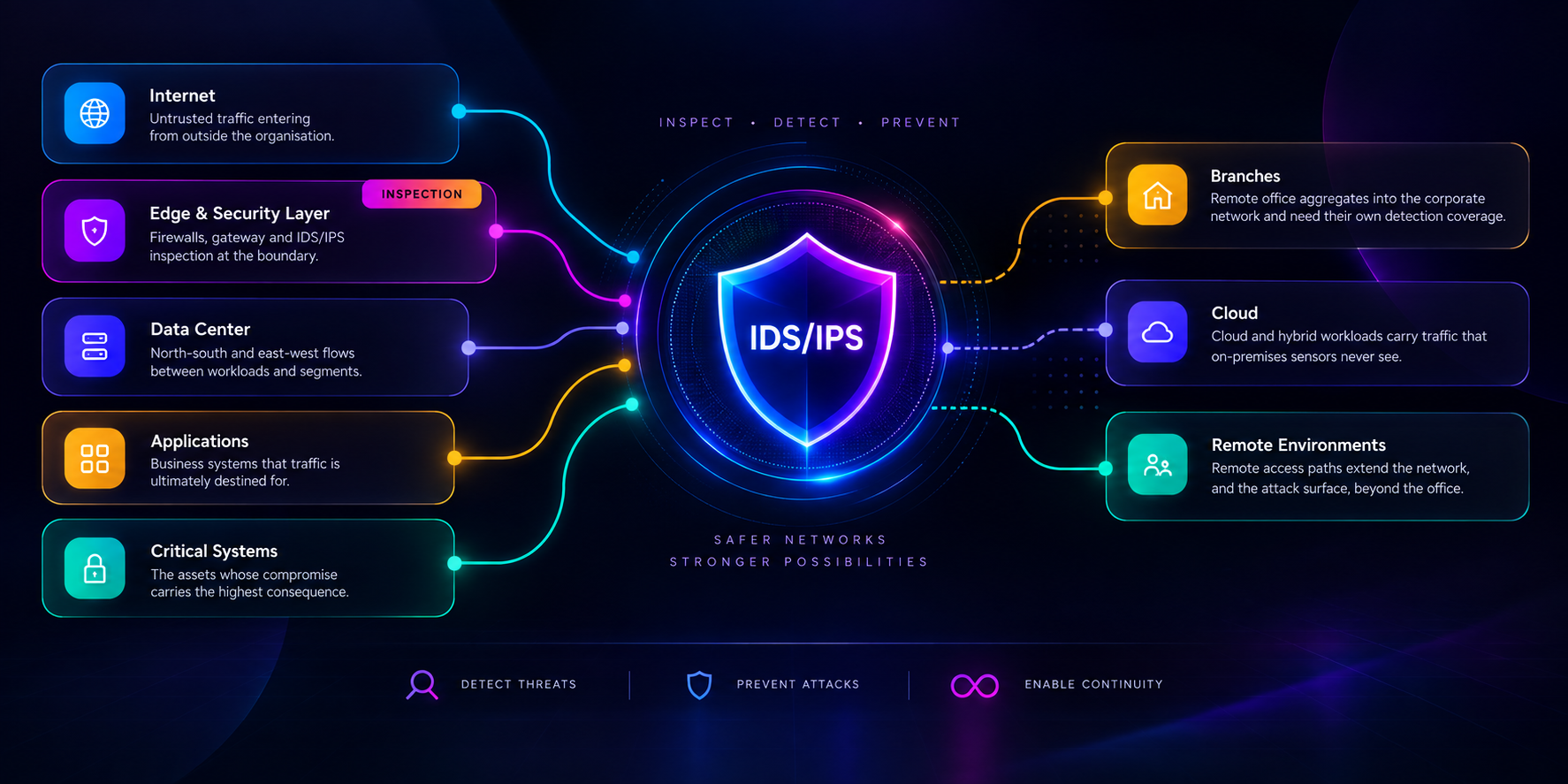
Untrusted traffic arriving from outside the organisation.
Firewalls, gateways and IDS/IPS inspection at the boundary.
North-south and east-west flows between workloads and segments.
Business systems that traffic is ultimately destined for.
The assets where compromise carries the highest consequence.
Remote sites aggregate into the corporate network and need their own detection coverage.
Cloud and hybrid workloads carry traffic that on-premises sensors never see.
Remote access paths extend the network, and the attack surface, beyond the office.
Inspect north-south traffic at the internet edge, where external threats first meet the network.
Watch traffic entering and moving between data centre segments, including east-west flows between workloads.
Extend detection to branch aggregation points so remote sites are not a visibility gap.
Apply detection to cloud and hybrid traffic paths where the platform supports inspection.
Position inspection directly in front of the applications and systems the business cannot afford to lose.
There is no single deployment model that suits every environment. IDS/IPS placement should be determined by your architecture, actual traffic flows, risk profile and security requirements, then revisited as the network changes.
Where the network carries something worth attacking, someone is already probing it. These are the environments where we most often design intrusion detection and prevention.
Payment rails and core banking links are high-value targets that need constant watching.
Imaging systems and clinical devices resist patching. Detection covers that gap.
Where OT meets IT, boundary inspection flags unexpected protocols reaching production.
Delivery centres carry heavy, varied traffic. Detection separates real work from intrusion.
Citizen services and inter-department links need auditable monitoring and retained evidence.
Store networks join payment terminals, back-office systems and vendor links across sites.
Open campus networks carry unmanaged devices at scale, without locking down the access.
Warehouse, tracking and partner systems run nonstop across many lightly watched sites.
High-throughput environments need inspection sized for perimeter and internal flows.
Guest networks, property management and payment systems share one estate and one boundary.
Anyone can turn on a sensor. The value is in knowing where to put it, what to detect, what to act on and how the result reaches your security team.
IDS/IPS sits where security meets the network. Our cybersecurity, managed IT and telecom practices work together, so detection design accounts for routing, capacity and operations, not security alone.
We map traffic flows, segments and trust boundaries before recommending anything, because inspection only works where the traffic you care about actually passes.
Visibility gaps are the most common weakness we find. We identify where the network is unmonitored and design sensor and inline placement to close those blind spots.
Detection is a design decision, not a default ruleset. We define what should be detected, at which points, with which approach, and how each detection is meant to be acted on.
IDS/IPS is positioned as one layer inside a wider architecture, complementing firewalls, segmentation and endpoint controls rather than duplicating them.
Inline inspection has throughput and latency implications. We plan sizing, placement and failure behaviour so security controls do not become an availability risk.
Untuned deployments drown teams in noise. We tune signatures, thresholds and prevention actions to the environment, and revisit them as the network changes.
Detections are routed into the platforms and workflows your teams already use, so network alerts arrive with context instead of arriving alone.
One engineering standard across regions, with local delivery teams for multi-site enterprises operating across time zones.
We stay technology-neutral and select detection and prevention platforms on architecture fit, inspection capability and how cleanly they integrate with the rest of your security stack.
Written by the Cylentrix network security practice for the engineers and IT leaders who will run the deployment, not the people selling it.
Deployment Guide
Where inspection belongs, how to size it, and the design questions to settle before anything goes inline.
Read the guide
Playbook
Turning detections into decisions: tuning signatures, setting prevention actions and reducing alert noise.
Read the playbook
Monitoring
Building network visibility that analysts can actually work with, and connecting it to SIEM and SOC workflows.
Read the guideThe questions security and network teams ask before deploying intrusion detection and prevention, answered the way our engineers answer them.
An Intrusion Detection System is a network security control that monitors traffic and identifies suspicious or potentially malicious activity. When traffic matches a threat signature, violates a configured rule or deviates from expected behaviour, the IDS generates an alert for the security team. An IDS is primarily a visibility and detection control: it observes and reports, but does not itself stop traffic.
An Intrusion Prevention System performs the same inspection and detection work as an IDS, but is deployed inline in the traffic path so it can act on what it finds. Where a detection matches a prevention policy, an IPS can block, drop or reset the session rather than only alerting. Prevention behaviour depends on the deployed technology, the confidence of the detection and the policy the organisation has configured.
The difference is placement and action. An IDS typically inspects a copy of network traffic and produces alerts, so it detects and reports. An IPS sits inline in the live traffic path and can apply prevention controls, so it detects and acts. Many enterprises run both models together: broad detection for visibility and investigation, with inline prevention on the paths where blocking known malicious traffic is appropriate.
Detection generally combines several approaches. Signature-based detection matches traffic against known attack patterns and threat signatures. Anomaly-based detection compares activity against a baseline of expected behaviour and flags deviations. Policy-based detection identifies traffic that violates configured network-security rules. Protocol and traffic analysis examines how communications behave rather than only what they contain. What a given deployment can detect depends on its rules, tuning, visibility and capabilities.
An inline IPS can block, drop or reset traffic that matches a prevention policy, which helps reduce the impact of recognised network threats. It is not a guarantee against every attack: prevention applies to activity the system can detect and is configured to act on. Effective deployments pair prevention with careful tuning so legitimate traffic is not disrupted, and treat IDS/IPS as one control within a layered security architecture.
Common placements include the internet edge, the data centre perimeter and internal segment boundaries, in front of critical applications, at branch network aggregation points, and in cloud environments where traffic inspection is supported. There is no single correct model. Placement should follow the architecture, the actual traffic flows, the risk profile of each environment and the organisation's security requirements.
These controls address different problems and work best together. A firewall enforces which connections are allowed; IDS/IPS inspects the traffic that is allowed and looks for malicious behaviour within it. Alerts from IDS/IPS can be forwarded into SIEM platforms for correlation with other telemetry, and into SOC workflows for triage, investigation and response. This integration turns network detections into context that analysts can act on.
Cylentrix works with enterprises across design, deployment and ongoing operation: assessing traffic flows and network architecture, determining where detection and prevention belong, planning sensor and inline placement, configuring and tuning detection and prevention policies, and integrating alerts with existing monitoring and response workflows. Our cybersecurity, managed IT and telecom teams work across India, USA and Singapore, so network performance and security requirements are considered together.
Improve network visibility, detect suspicious activity and strengthen threat prevention with an IDS/IPS strategy designed around your environment. Our engineers will review your traffic flows and architecture, then recommend where detection and prevention genuinely belong. Explore how this connects with our network security architecture, next-gen firewall and managed SOC services.
Share your traffic flows, your sites and what you actually need to protect. A Cylentrix network security engineer reviews every enquiry and replies with a specific next step within one business day.
Tell us what your network looks like today. An engineer reviews every enquiry and replies with a specific next step, not a sales sequence.