
CYBERSECURITY · MANAGED SOC
Managed SOC Services
Managed SOC Services
for 24/7 Threat Detection
& Response
Cylentrix Managed SOC provides continuous security monitoring, threat detection, investigation and response across your endpoint, network, cloud and identity estate. Our security analysts operate the SIEM and SOAR layer for you, correlating events, validating alerts and driving incident response, so threats are contained before they become business-impacting incidents.
- 24/7SOC Monitoring
- SIEMManaged & Tuned
- SOARAutomation
- INTELThreat Intel
- IRIncident Response
- 3Global Regions
01MANAGED SOC OVERVIEW
24/7 Security Operations
24/7 Security Operations
Without Building a SOC
From Scratch
A Managed Security Operations Center gives you the outcome of an in-house SOC, continuous visibility and a documented response path, without the headcount, tooling and tuning effort behind it.
Running your own security operations center means staffing analysts across three shifts, licensing and tuning a SIEM, writing detection content, and keeping all of it current as attacker techniques change. Most enterprises need the security outcome, not the operational overhead.
Cylentrix Managed SOC services deliver that outcome as a service. We ingest security events from the systems you already run, correlate them in a managed SIEM, and put analysts behind every signal, so you get continuous security visibility and a response capability that is ready before you need it.
Onboarding starts with what you already own. We map your existing security controls, identify where telemetry is missing, agree severity definitions and escalation contacts with your team, then tune detections against your environment before the service goes live.
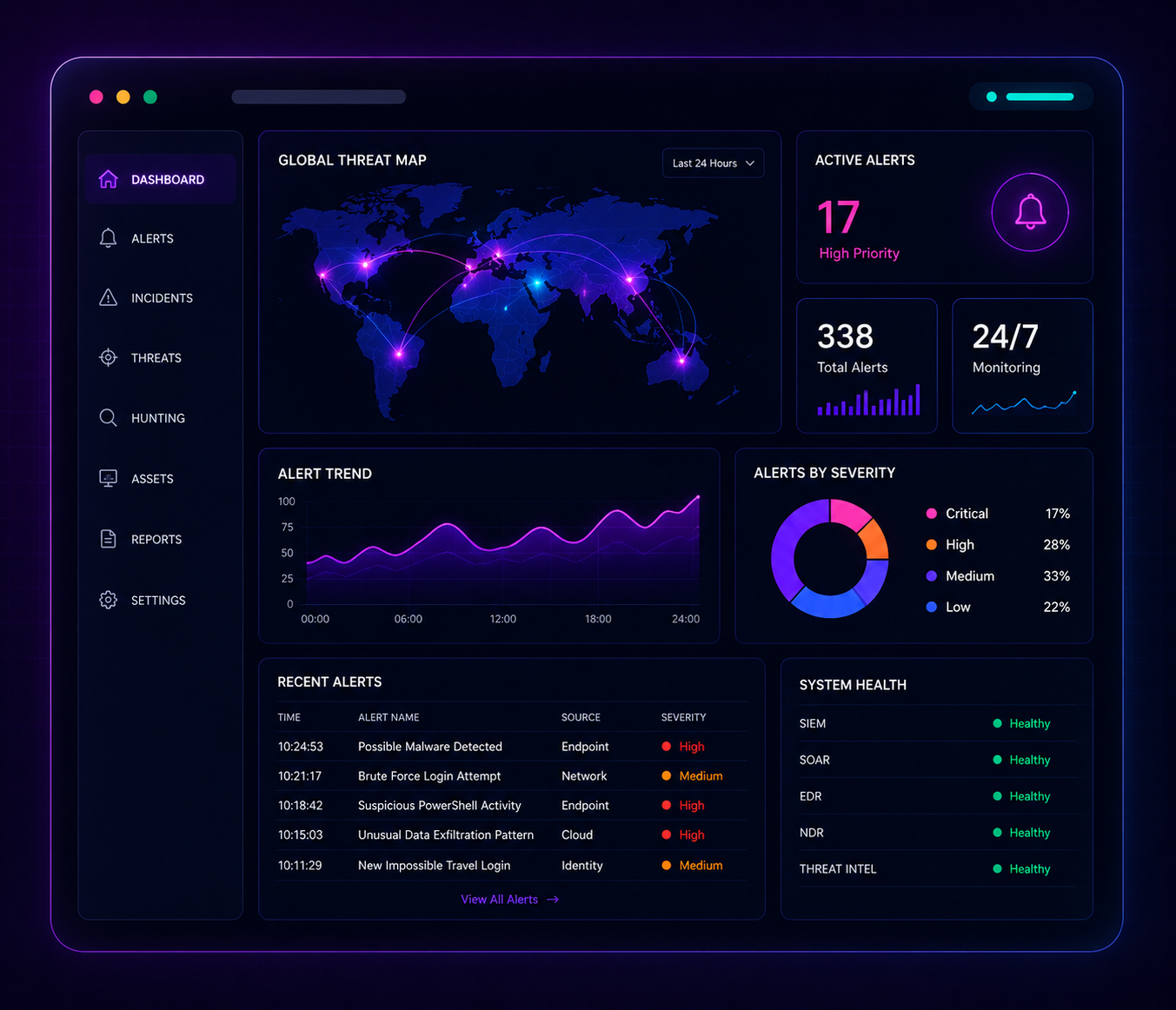
What our Managed SOC covers
Six disciplines, run as one security operation and owned end to end by the same team.
- 24/7 SOC monitoring Endpoint, network, cloud and identity telemetry watched continuously, including nights, weekends and holidays.
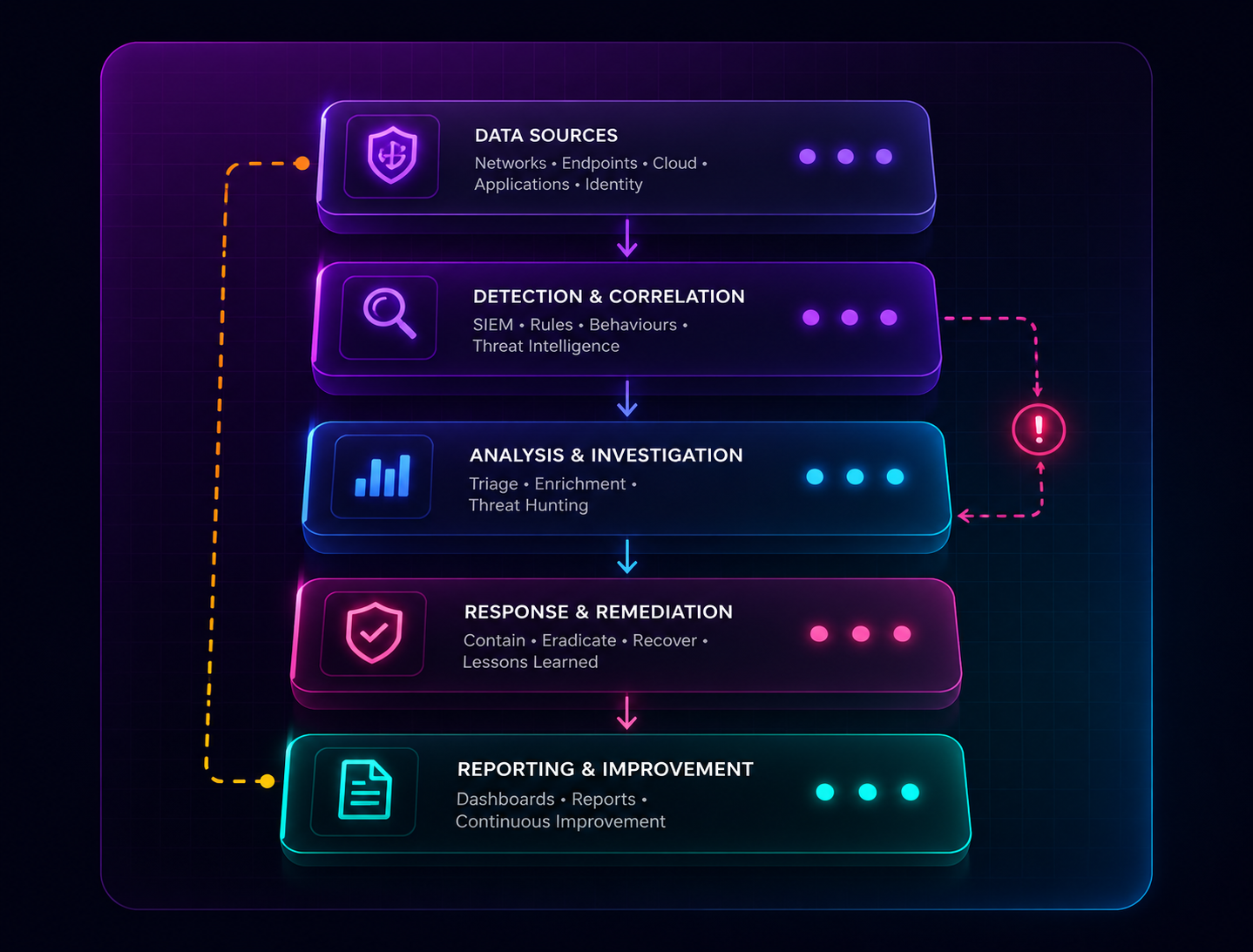
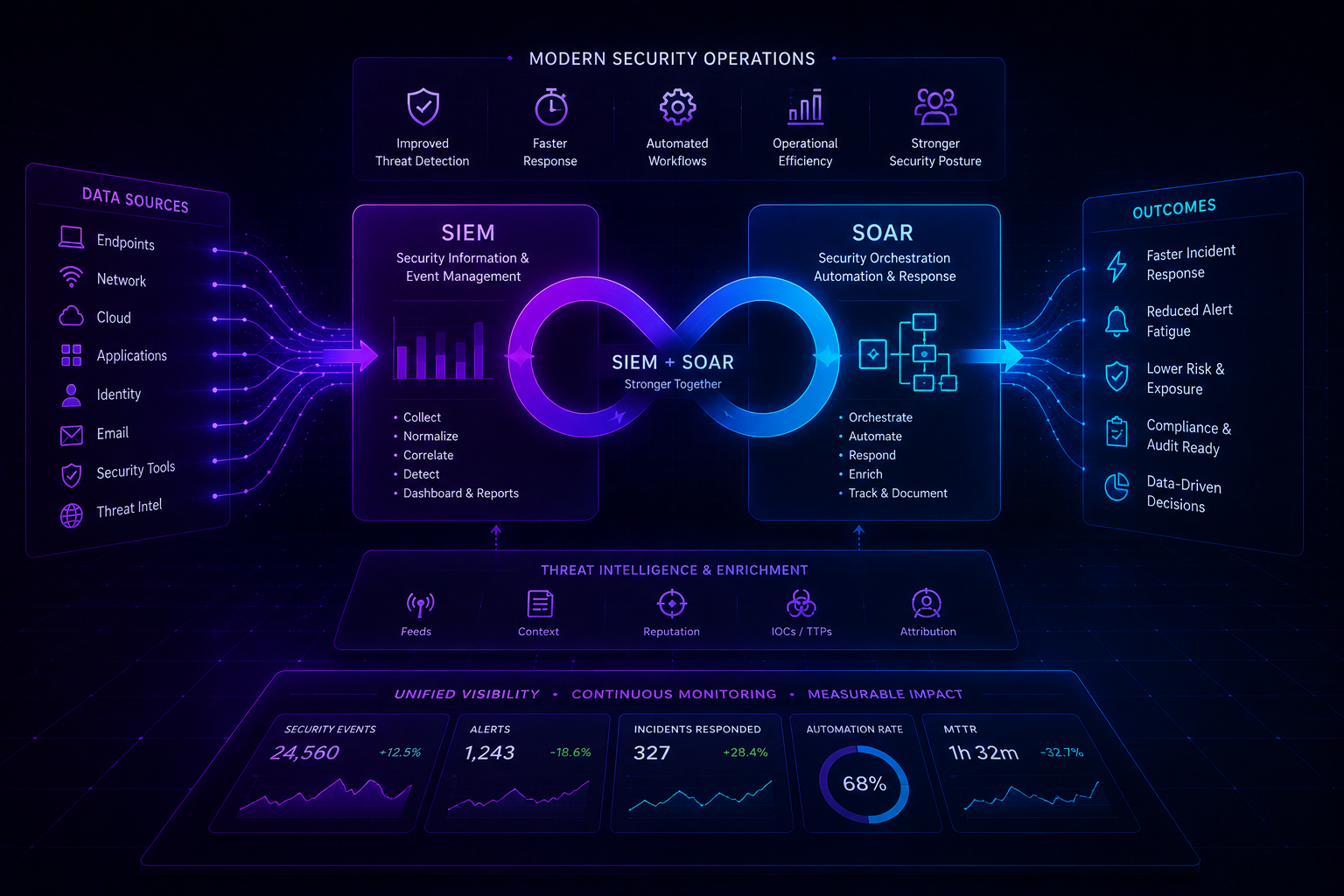
- Managed SIEM Log onboarding, parser health, detection content and retention, deployed and tuned by our team rather than yours.
- SOAR automation Playbooks handle enrichment, containment and ticketing, with EDR and XDR telemetry behind every decision.
- Threat detection and analysis Correlation rules, behavioural baselines and AI-assisted detection cut millions of raw events down to what matters.
- Investigation and incident response Escalations arrive validated, with scope and blast radius established before containment begins.
- Threat intelligence and hunting Intelligence feeds enrich detections, and hypothesis-led hunts look for the activity that never raised an alert.
03BUSINESS BENEFITS
The business case for
The business case for
Managed SOC
Security operations are judged on outcomes: how quickly a threat is found, what it costs to stay covered, and whether the evidence stands up when someone asks for it.
-
Faster detection and response
Continuous monitoring and tuned correlation help shorten the gap between suspicious activity and a decision, so incidents are contained earlier.
-
Coverage without building a team
Round-the-clock analyst cover, detection engineering and SIEM tuning, without recruiting and retaining staff across three shifts.
-
A shorter, sharper alert queue
SOAR automation and AI-assisted triage group and rank related alerts, so your team reviews validated escalations instead of raw noise.
-
More predictable security spend
One managed service in place of platform licences, tooling and headcount that each scale on their own curve.
-
Audit-ready evidence
Log retention, incident records and response documentation designed to support the audits and regulatory obligations you already carry.
-
Visibility across the estate
Endpoint, network, cloud and identity telemetry correlated in one place, so risk is judged against the whole environment, not one console at a time.
04INDUSTRIES
Industries that need
Industries that need
continuous security monitoring
Wherever an undetected intrusion carries regulatory, safety or revenue consequences, a Managed SOC is the layer that shortens the time between compromise and containment.
-

Manufacturing
IT and OT now overlap. We watch for lateral movement into the plant floor.
-

Healthcare
Patient records, connected devices and clinical systems must stay available and protected.
-

BFSI
Credential abuse, fraud and reporting duties demand 24/7 detection with an audit trail.
-

IT & Technology
Source code, CI/CD pipelines and customer environments widen the attack surface.
-

Education
Open networks, unmanaged devices and research data make identity monitoring essential.
-

Retail
POS estates, e-commerce and payment data need cover against ransomware and takeover.
-

Logistics
Warehouse systems, telematics and partner links run non-stop, so intrusions spread fast.
-

Government
Citizen data and public services face persistent, targeted activity needing governance.
-

Data Centers
Multi-tenant hosting risk. Visibility spans hypervisor, fabric and management planes.
-

Hospitality
Guest data, payment systems and property platforms across many thinly staffed sites.
07WHITEPAPERS & RESOURCES
Read the thinking behind
Read the thinking behind
the security operation
Practical guides from the Cylentrix security practice, written for the people who will own detection and response, not for the people selling it.
-
 SOC GUIDE
The Modern Security Operations Center Guide
How a modern SOC is structured, what it monitors, and where in-house and managed models genuinely make sense.
Read the guide -
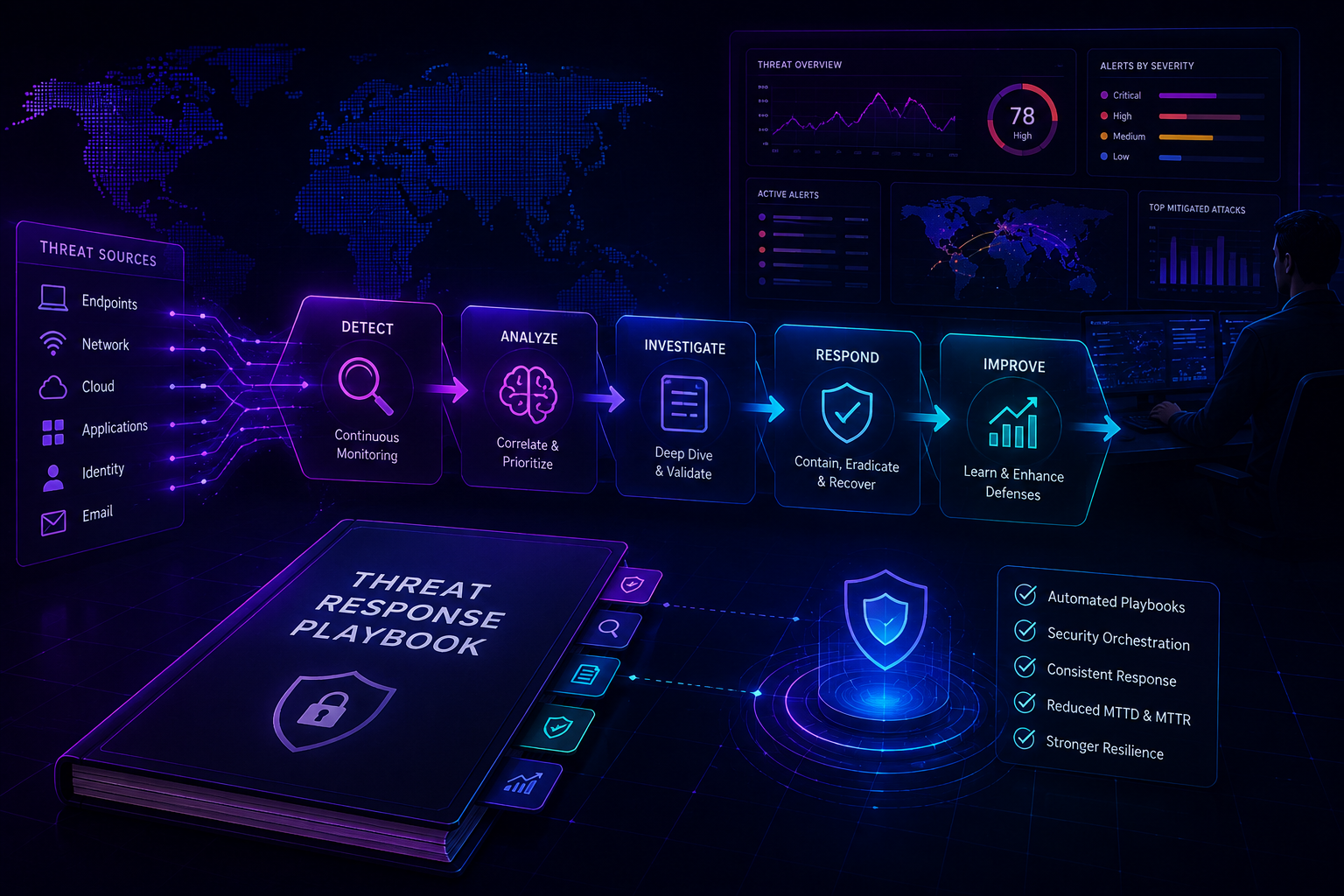 PLAYBOOK
Enterprise Threat Detection & Response Playbook
From detection engineering to containment: how mature teams structure triage, investigation and response.
Read the guide -
 STRATEGY
SIEM & SOAR Strategy for Modern Security Operations
Choosing, tuning and automating the detection stack, and avoiding the alert fatigue that follows a poor rollout.
Read the guide