
Protect sensitive business data across endpoints, email, cloud, applications and networks with intelligent data discovery, classification, monitoring and policy-based protection.
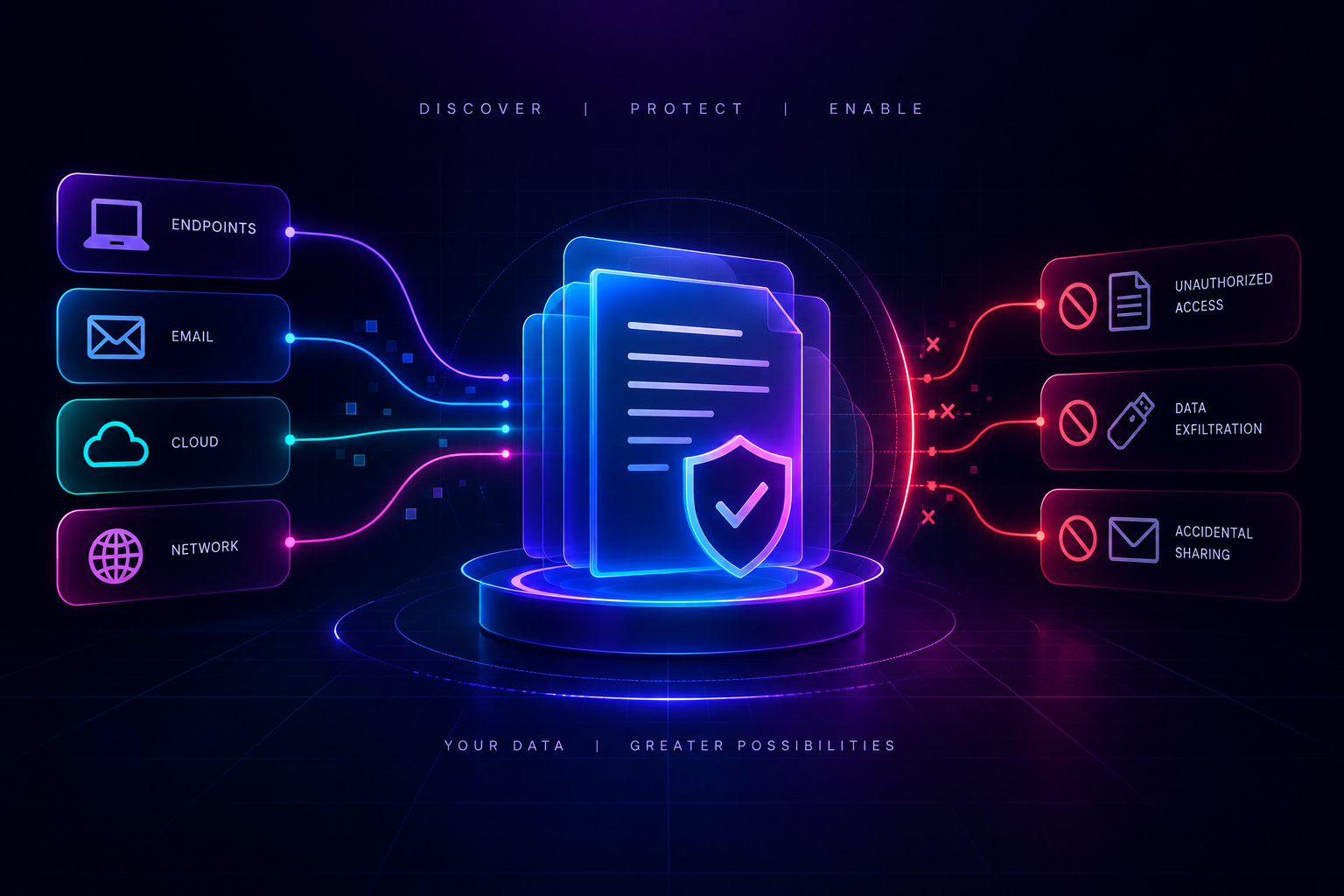
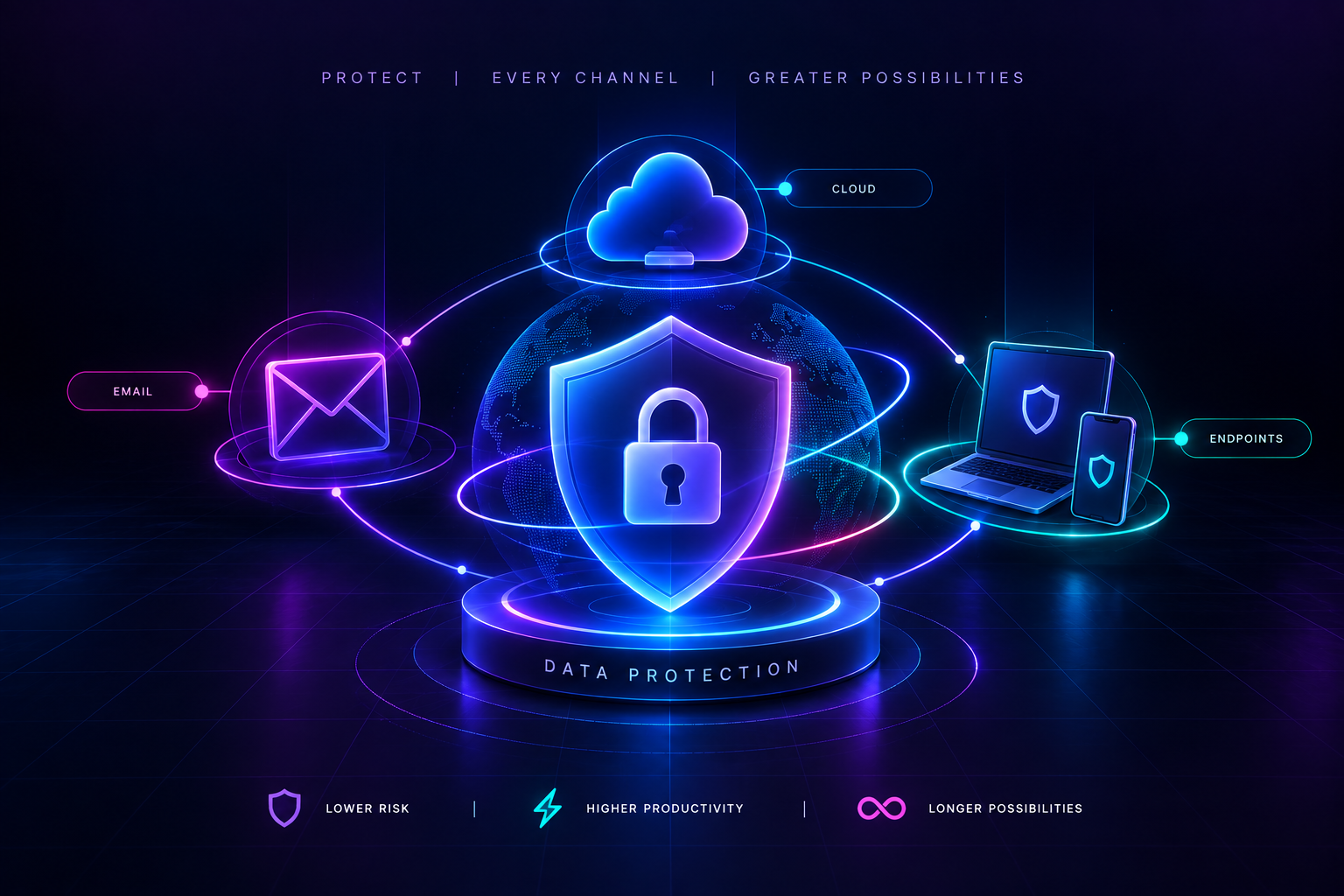
Data Loss Prevention identifies sensitive information, tracks how it is handled and applies policies that reduce accidental or unauthorized exposure. Cylentrix covers the full path that data travels, across endpoints, email, cloud, network and storage.
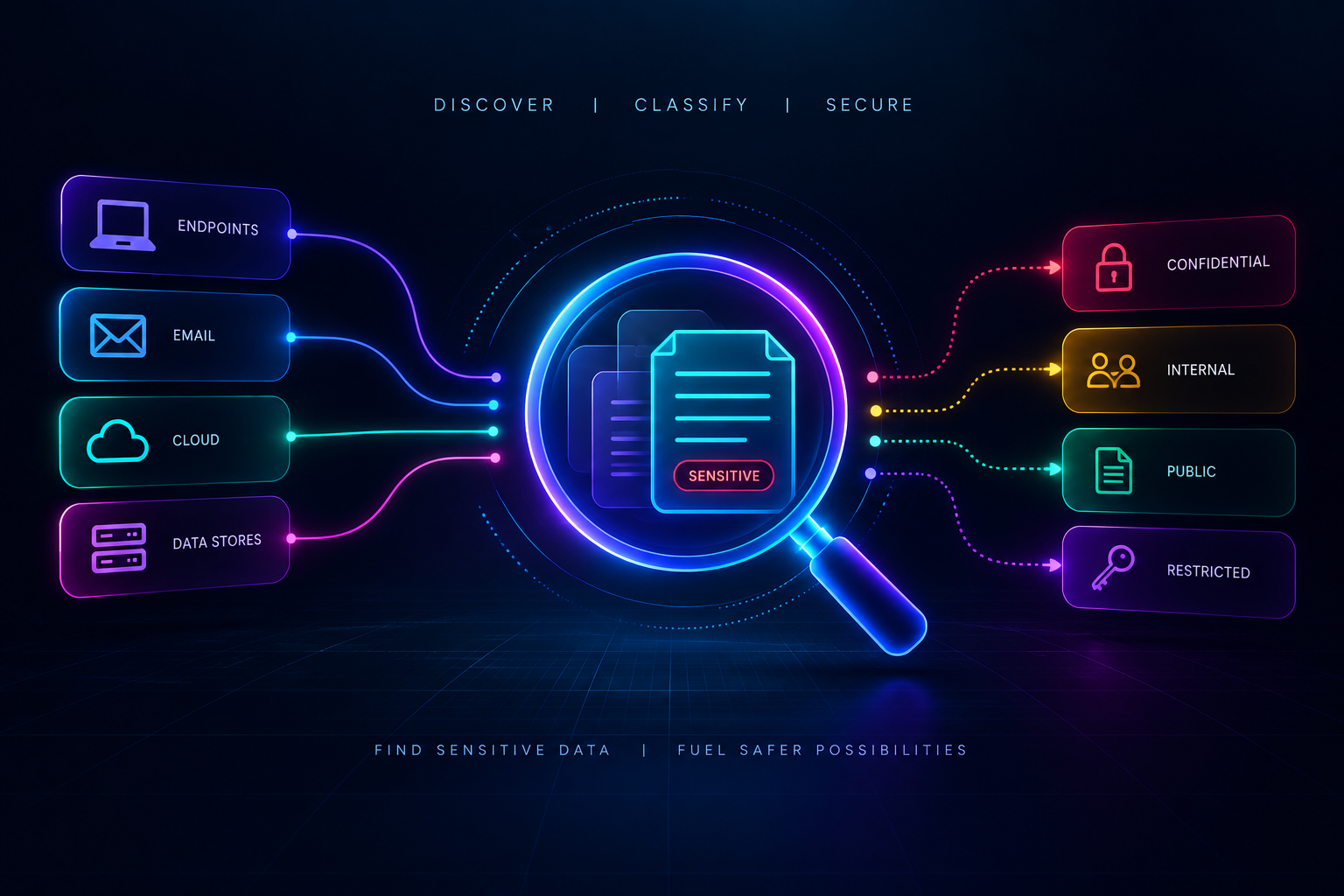
Identify sensitive and business-critical information across approved environments, including endpoints, file shares and cloud storage.
Classify information by sensitivity, business importance and protection requirement so controls travel with the data.
Help control how sensitive information is copied, transferred, printed or shared from managed endpoints and removable media.
Identify and control sensitive information sent through email, including attachments and external recipients.
Extend data protection policies to sanctioned cloud applications, storage and collaboration platforms.
Monitor and control sensitive information moving across approved network channels and egress points.
Apply rules that help prevent unauthorized handling or sharing of sensitive information based on user, role and destination.
Provide visibility into policy events, data-handling trends and potential data-loss activity for security and compliance teams.
A DLP programme succeeds when policies reflect how the business actually works. Cylentrix runs a phased path from visibility to control, tuning at each step.
Identify where sensitive information exists across approved environments.
Determine the sensitivity and business importance of the information found.
Create rules based on data type, user, application, channel and business need.
Observe relevant data movement and handling activity across covered channels.
Identify activity that may violate established data protection policies.
Apply the control or escalation defined for that policy, event and data type.
Analyse events, cut false positives and improve data protection policies over time.
Not every event results in a block. Depending on the configured policy and technology, actions may include alerting, blocking, quarantining or requiring additional review. Most enterprises start in monitoring mode, learn how data really moves, then tighten enforcement where the risk justifies it.
One policy model applied consistently across every surface is what turns data protection from a tooling exercise into a measurable reduction in business risk.
Fewer misdirected emails, open share links and untracked copies across the channels people use daily.
Classification records and policy reporting that support audit, regulatory and customer due-diligence conversations.
One rule set across endpoint, email, cloud and network instead of per-tool exceptions that drift apart over time.
Clear reporting on where sensitive data lives, who touches it and how it moves, so security spend follows real risk.
Phased enforcement tuned to how teams actually work, so controls tighten without stalling the business.
Every sector has its own crown jewels and its own handling obligations. Cylentrix shapes DLP policies around the data that matters most in your industry.
Design files, CAD drawings and process data sit on engineering endpoints and shared drives.
Patient records, diagnostic images and insurance data move between clinicians and third parties.
KYC records, account details and credit files carry statutory handling duties on every channel.
Source code, client datasets and delivery documents must stay inside contracted boundaries.
Student records, exam material and research data move across faculty and personal devices.
Customer lists and loyalty databases flow between stores, marketing and analytics tools.
Shipment manifests, addresses and rate cards pass between partners and handheld devices.
Citizen data, correspondence and tender documents need classification and controlled movement.
Configuration data, tenant records and backup sets need rules on what may leave the estate.
Guest profiles, identity scans and booking records pass through property systems and agents.
DLP fails when it is treated as a product install. Cylentrix approaches it as a programme: understand the data, agree the rules with the business, then enforce them where they matter.
Data protection touches endpoints, identity, applications and networks. One partner owns all four rather than coordinating three vendors.
Discovery before deployment. Knowing what exists and where it lives is what makes every later policy decision defensible.
A simple, business-aligned model beats an elaborate scheme nobody applies. We design labels around how your teams actually work.
Rules built around data type, user, channel and destination, tuned through monitoring before enforcement is tightened.
Coverage across the channels where data actually leaves, under one consistent policy set and one reporting view.
Data policies aligned to identity and access context, so decisions account for who the user is and what they legitimately need.
Data protection events feed the same monitoring and investigation workflow as the rest of your security telemetry.
Highest-value data and highest-risk channels first, so the programme delivers protection early instead of stalling in scoping.
Documentation and reporting that support audit and regulatory conversations, delivered from India, USA and Singapore.
Cylentrix works with established data protection and security platforms, selecting the technology that fits your environment, data types and operating model.
Data protection technology ecosystem
Written by the Cylentrix data protection practice for the security and IT leaders who will own the programme after the project ends.
Buyer's Guide
Scoping a DLP programme, choosing coverage, and the questions to ask before selecting a platform.
Read the guide
Playbook
Building a classification model that people apply consistently, and running discovery without stalling the business.
Read the playbook
Strategy
Designing one policy set that holds up across every channel where sensitive information can leave.
Read the paperThe questions security and IT leaders ask before starting a DLP programme, answered the way our data protection engineers answer them.
Data Loss Prevention (DLP) is a set of technologies and policies that help organisations identify sensitive information, understand where it is stored and how it moves, and control how it is shared. A DLP programme typically covers data discovery, data classification, policy definition, monitoring of data movement and a defined response when a policy is violated. It applies across endpoints, email, cloud applications, networks and storage.
Most security controls focus on keeping attackers out. DLP focuses on the information itself, which can leave an organisation through everyday activity such as email, file sharing, cloud uploads, removable media or over-broad access. DLP gives security teams visibility into where sensitive data lives and how it is handled, and provides a policy framework to reduce accidental and unauthorized exposure alongside existing controls.
DLP is typically applied to customer and employee personal data, financial records, payment and account information, health records, identity documents, contracts and legal files, intellectual property such as source code and design files, pricing and commercial data, and internal strategic documents. The exact scope is defined during data discovery and classification, based on business and regulatory requirements.
Yes. Modern DLP is deployed across multiple channels: endpoint DLP covers copying, transferring, printing and removable media on managed devices; email DLP inspects outbound messages and attachments; cloud and SaaS DLP applies policies to sanctioned cloud storage and collaboration platforms; and network DLP monitors sensitive information moving across approved network channels. Coverage depends on the platforms in scope and the controls each supports.
Data at rest is stored information in file servers, databases, endpoints, backups and cloud storage. Data in motion is information moving across email, network transfers, cloud sharing and file transfers. Data in use is information actively being handled on an endpoint or in an application, such as copying, pasting, printing or transferring to removable media. A complete DLP strategy addresses all three states rather than only scanning stored files.
DLP platforms identify sensitive information using techniques such as pattern and keyword matching, regular expressions for structured identifiers, document fingerprinting, file type and metadata inspection, classification labels applied by users or systems, and contextual signals including user, application, destination and channel. Analytics can help refine matching over time and reduce false positives. Available techniques vary by platform.
Depending on the configured policy and the capabilities of the technology in use, actions may include alerting, logging, blocking, quarantining, encrypting, prompting the user for justification or requiring additional review. Most organisations begin in monitoring mode to understand normal data handling, then progressively enable stricter enforcement for the highest-risk data and channels.
Cylentrix helps enterprises define the scope of sensitive data, run discovery across approved environments, build a practical classification model, design policies for endpoints, email, cloud and network channels, deploy and tune the selected DLP technology, and integrate data protection events into existing security monitoring. Engagements are phased, starting with visibility and moving toward enforcement as policies mature.
Discover sensitive information, control how it moves and strengthen your organisation's data protection strategy with a practical DLP approach built around how your business actually works.
Request a quote or a data protection review. Share a few details and our team will get back to you.