Unified SASE
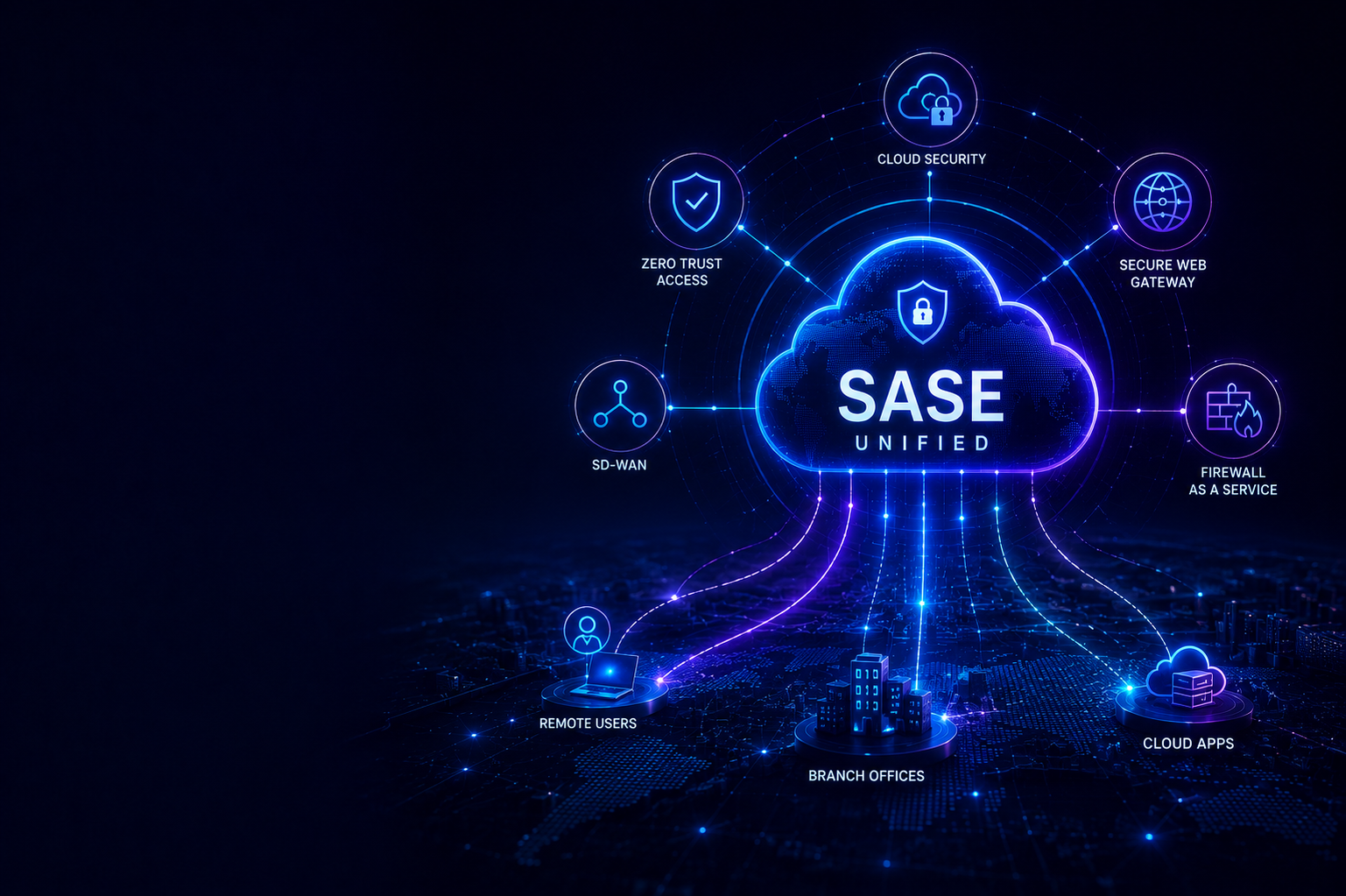
Unify networking and security across users, branches, cloud applications and distributed environments with a scalable SASE architecture designed for modern enterprise connectivity. Cylentrix helps enterprises bring Secure Access Service Edge capabilities — SD-WAN, network security and cloud security — together under one policy framework, so access follows the user rather than the perimeter.
- Connect
- Secure
- Control
- Optimize
- Scale
- SD-WANSite Connectivity
- ZTNAZero Trust Access
- SWGSecure Web Gateway
- FWaaSCloud Firewall
- CASBCloud App Security
- UnifiedPolicy & Visibility
What Is SASE?
A direct answer, then the architecture: what Secure Access Service Edge means for an enterprise network, and what Unified SASE converges into one platform.
SASE stands for Secure Access Service Edge. It is an architectural approach that converges networking and security capabilities into a single, policy-driven service model delivered close to users, devices, applications and locations.
Traditional designs backhaul traffic to a central data centre to pass through a stack of security appliances. That worked when users and applications sat in one building. It fits poorly when the workforce is distributed and applications live in SaaS platforms and public cloud.
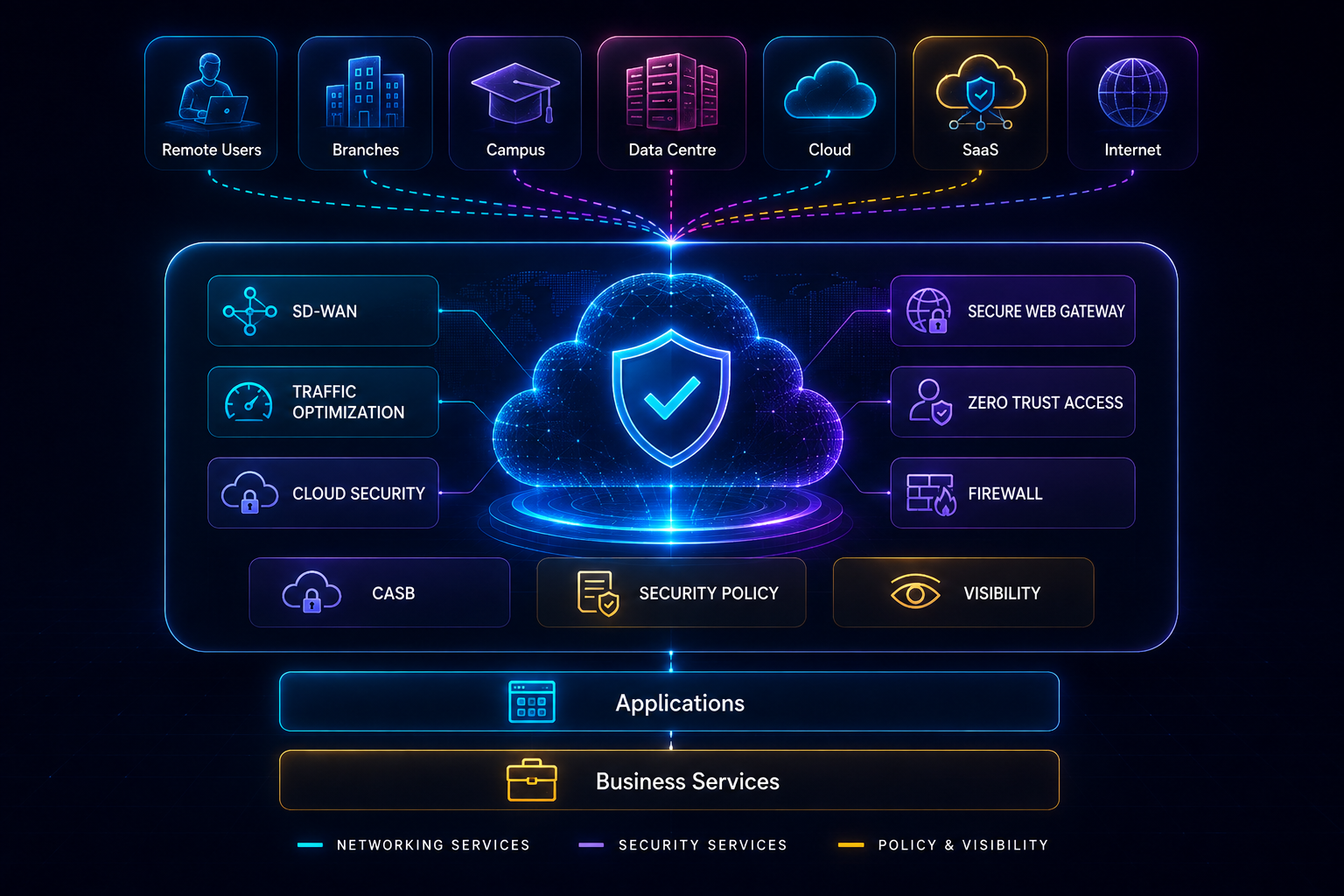
Unified SASE moves those controls to the edge. SD-WAN and intelligent routing sit alongside secure web gateway, zero trust access, firewall and cloud access control — administered through one policy framework rather than a collection of disconnected consoles.
SASE is a model, not a single product. Not every organisation needs every component, and most enterprises adopt it in stages.
-
SD-WAN & Intelligent Routing
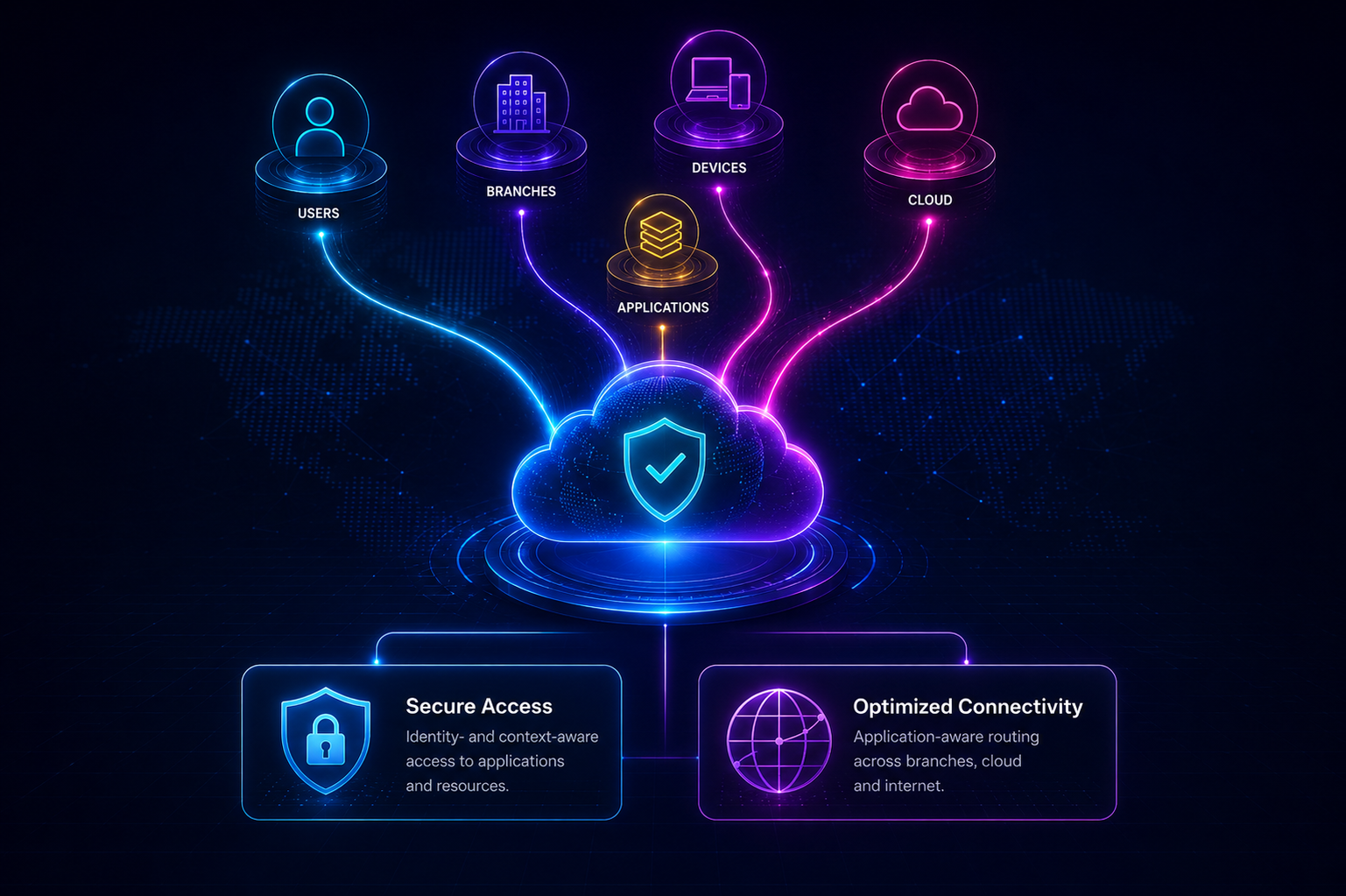
Optimizes application-aware traffic across branches, campus and remote sites, with local internet breakout where appropriate.
-
Secure Web Gateway
Helps protect users and traffic reaching internet resources, with the same policy applied wherever the user connects.
-
Zero Trust Access
Applies identity- and context-aware access to applications and resources, rather than trusting the network a user sits on.
-
Cloud & SaaS Access Security
Improves visibility and control over cloud and SaaS usage, and supports secure connectivity to hybrid and multi-cloud environments.
-
Firewall & Threat Protection
Extends security policy and threat controls to branches and remote users, helping identify and reduce relevant threats.
-
Central Policy & Visibility
One policy framework and one operational view across users, sites and applications, with SOC integration where required.
What Unified SASE
Changes for the Business
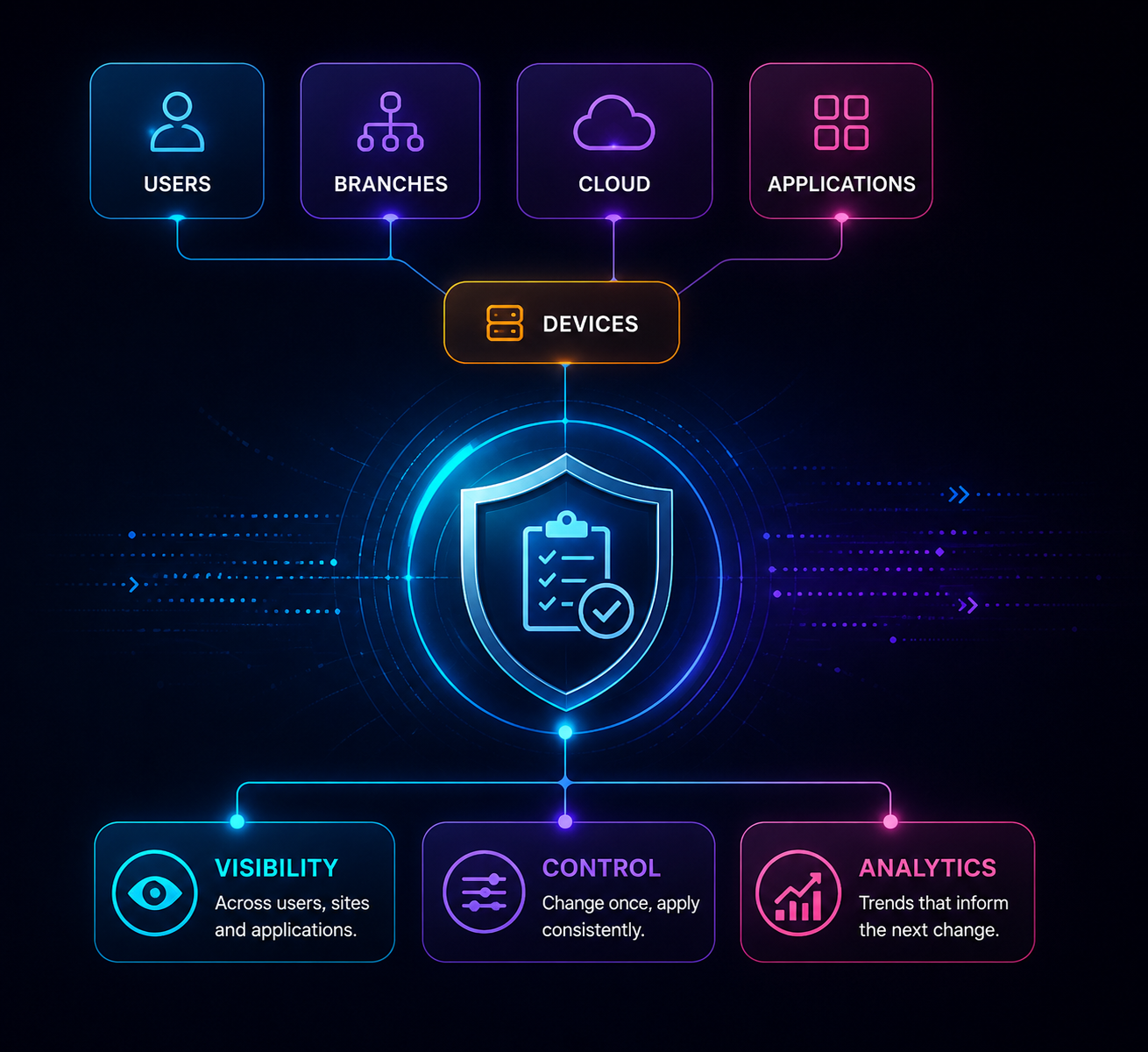
Convergence is the means; these are the ends. One policy framework, one operational view, and AI-assisted analysis to help teams read what the environment is telling them.
-
Consistent Security
The same access rules follow users, devices and applications, which helps remove the gaps that appear between per-site configurations.
-
Simpler Operations
A change is made once and applies across relevant environments, reducing configuration drift and shortening routine change cycles.
-
Unified Visibility
Activity across users, locations and applications is available from one operational view rather than reassembled from several tools.
-
Application Experience
Application-aware routing and policy help prioritize connectivity for the traffic the business depends on most.
-
AI-Assisted Insight
AI-assisted analysis can help teams identify traffic patterns, surface anomalies and prioritize operational insights, while engineers keep oversight of every decision.
-
Room to Scale
New sites and users inherit the established policy rather than a bespoke build, so growth does not mean a fresh design each time.
Where Unified SASE
fits the operating model
Distributed sites, remote users, cloud adoption and regulated data change what a network has to do. These are the sectors where that pressure shows up first.
-

BFSI
Branch networks, regulated data and third-party access need consistent policy and auditable visibility everywhere.
-

Healthcare
Clinicians move between sites and devices while patient systems move to cloud. Access has to follow the user securely.
-

Manufacturing
Plants, warehouses and vendors connect to cloud platforms. SASE helps apply one policy across every location.
-

IT & Technology
Hybrid teams, multi-cloud estates and client environments need secure application access without VPN sprawl.
-

Government
Departments spread across many offices need controlled access to shared services with clear operational visibility.
-

Retail
Every new store should inherit the same connectivity and security profile rather than a one-off configuration.
-

Education
Campuses, remote learners and cloud platforms need differentiated access policy for staff, students and guests.
-

Logistics & Critical Infrastructure
Hubs, depots and field sites depend on continuous, controlled access to central and cloud-hosted systems.
Reading before
the architecture review
Practical guides written by the Cylentrix network and security practice for the teams who will own the design.
-
 Architecture Guide
The Enterprise SASE Guide
What Secure Access Service Edge converges, which components matter for your estate, and how to scope a first phase.
Read the guide -
 Comparison
SASE vs Traditional Network Security: What Enterprises Need to Know
Where perimeter-centric design breaks down for distributed users, and what changes when enforcement moves to the edge.
Read the comparison -
 Network Architecture
SD-WAN & SASE: Building a Modern Enterprise Network
How SD-WAN fits inside a broader SASE architecture, and when a standalone managed SD-WAN is the better answer.
Read the paper